
What causes low testosterone in men is usually one of a short list of things: age, excess weight or type 2 diabetes, sleep apnea, a medication such as an opioid or prednisone, heavy alcohol use, a chronic illness, or damage to the testes or the pituitary gland. Many have more than one. The job at a doctor visit is to find out which ones apply to you, because some of them can be undone and some cannot.
Quick answer: The most frequent causes of low testosterone in men are aging, obesity, type 2 diabetes, obstructive sleep apnea and medications such as opioids and corticosteroids. Less common causes include testicle injury, mumps orchitis, chemotherapy or radiation, iron overload, Klinefelter syndrome and pituitary problems. The Endocrine Society notes that causes tied to weight, illness or medication are potentially reversible once the underlying problem is treated.
What causes low testosterone in men: the two groups doctors sort by
Testosterone is made in the testes, on orders sent from the hypothalamus and pituitary gland in the brain. A problem anywhere along that chain can drop your level. Doctors sort it two ways.
The first split is by location. Mayo Clinic’s overview of male hypogonadism calls a problem in the testes primary hypogonadism and a problem with the brain’s signal secondary hypogonadism. The second split matters more to you as a patient. The Endocrine Society’s 2018 guideline (Bhasin et al.) separates organic hypogonadism, which comes from permanent damage or a congenital condition, from functional hypogonadism, which comes from conditions that are potentially reversible with treatment of the underlying cause, such as obesity, other illnesses and certain medications.
That second split is why a cause search matters. Same number, different story.
Causes of low testosterone at a glance
No single study ranks these causes by how often they turn up across all men, so the table runs from the conditions with the largest published numbers down to the rare ones.
| Cause | Where it acts | What the sources report |
|---|---|---|
| Aging | Testes and brain signal | Levels can drop about 1% a year starting in the late 30s (Cleveland Clinic) |
| Obesity | Brain signal, plus conversion to estradiol | 40% of obese men without diabetes, age 45 and up, had low free testosterone (Diabetes Care, 2010) |
| Type 2 diabetes | Insulin resistance | 50% of obese men with diabetes had low free testosterone (same study) |
| Opioid pain medicines | Brain signal | 19% to 86% of long-term users, depending on the definition used (J Endocrinol Invest, 2018) |
| Obstructive sleep apnea and short sleep | Brain signal | Eight nights of under 5 hours cut levels 10% to 15% in young men (JAMA, 2011) |
| Corticosteroids and anabolic steroids | Brain signal | Both listed by the Endocrine Society and Harvard Health |
| Alcohol use disorder | Testes and brain signal | Listed under both primary and secondary causes (Cleveland Clinic) |
| Chronic illness (HIV, cirrhosis, kidney failure) | Brain signal | Listed as acquired secondary causes (Cleveland Clinic, Mayo Clinic) |
| Testicle injury, mumps orchitis, chemotherapy or radiation | Testes | Mumps as a teen or adult can harm the testicles (Mayo Clinic) |
| Iron overload (hemochromatosis) | Testes and pituitary | Too much iron can cause the testicles to fail (Mayo Clinic) |
| Klinefelter syndrome | Testes | About 1 in 650 male newborns; up to 65% are never diagnosed (MedlinePlus Genetics) |
| Pituitary tumor, high prolactin, Kallmann syndrome | Brain and pituitary | Less common; the AUA advises a prolactin test when LH is low or low-normal |
The common causes of low testosterone
Age
Age is real, but it is slow. Cleveland Clinic puts the drop at about 1% per year starting in your late 30s, and Harvard Health says part of the reason is a smaller number of testosterone-producing cells in the testes as men get older. A Harvard Health summary of 11 studies covering about 25,000 men found that levels tend to decline slowly in middle age and often fall faster after 70.
Slow is the point. A 1% yearly slide does not explain a man in his 40s whose number fell off a cliff, and a doctor who stops at “you’re getting older” has skipped the rest of this list.
Excess weight and type 2 diabetes
Fat tissue works against testosterone in two ways. According to Harvard Health, obesity lowers the pituitary hormone that tells the testes to make testosterone, and it converts more of the testosterone you do make into estradiol. The same article says the insulin resistance of type 2 diabetes reduces testosterone too.
The numbers are large. In a 2010 Diabetes Care study of 1,849 men age 45 and older, led by Sandeep Dhindsa at the University at Buffalo, 40% of obese men without diabetes and 50% of obese men with diabetes had low free testosterone. The Harvard summary of 11 studies also linked a body mass index above 27, less than 75 minutes of vigorous activity a week, having ever smoked, high blood pressure, heart disease, cancer and diabetes with lower levels.
Which came first in a given man, the weight or the low hormone, is often impossible to tell from one blood draw.
Sleep apnea and short sleep
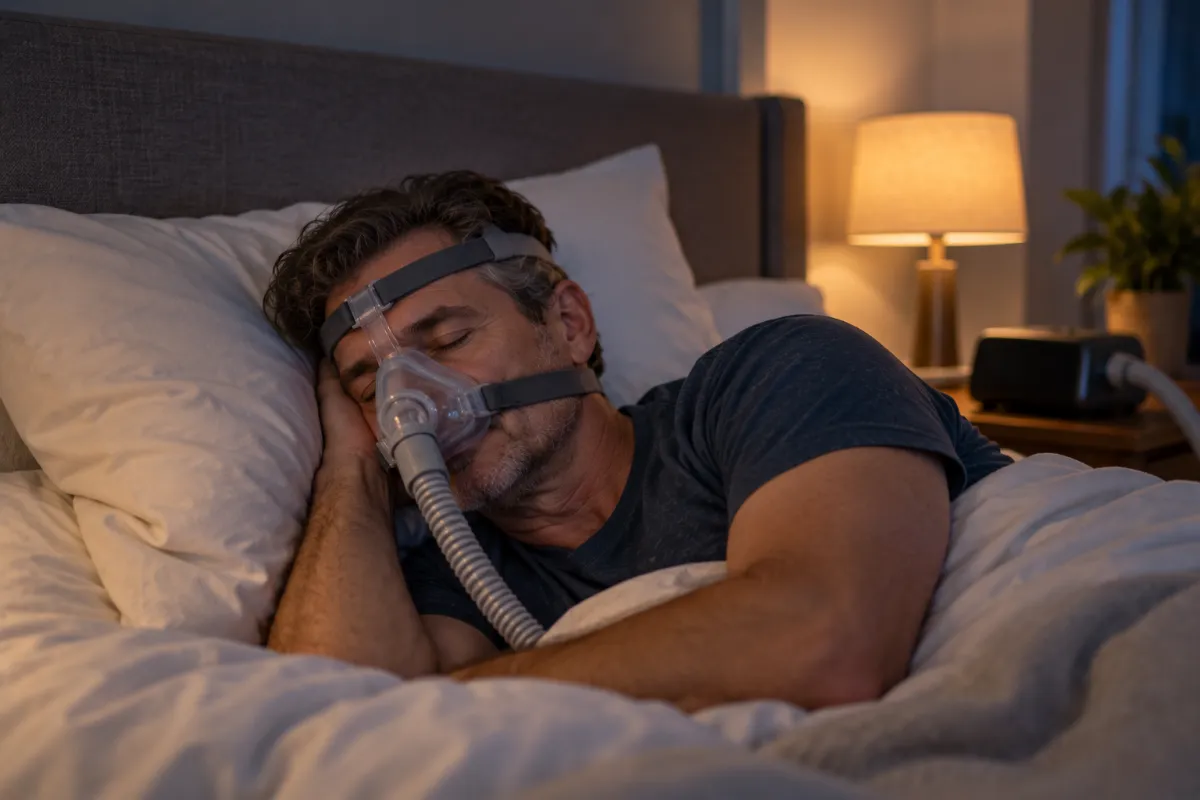
Mayo Clinic lists untreated obstructive sleep apnea as a cause of secondary hypogonadism. Short sleep counts even without apnea. In a University of Chicago study published in JAMA in 2011, ten healthy men with an average age of 24 slept less than five hours a night for eight nights, and their testosterone fell 10% to 15%, which the researchers compared to aging 10 to 15 years. Ten men is a small study. Still, a sleep history belongs in every workup.
Opioids, steroids and other medications
Medication is the cause men forget to mention. Opioid pain medicines suppress the brain hormones that drive the testes, and a 2018 review in the Journal of Endocrinological Investigation (Coluzzi and colleagues) put the rate of opioid-induced androgen deficiency at 19% to 86%, depending on how deficiency was defined. Harvard Health also lists prednisone, other corticosteroids and anabolic steroids. Cleveland Clinic adds certain medicines for prostate cancer, digestive problems and pain, along with medicines used to treat opioid dependence.
The Endocrine Society guideline suggests testing men who take medications that affect testosterone, such as opioids and glucocorticoids, and men withdrawing from long-term anabolic steroid use. It also says not to test men who are on a short course of a drug like an opioid.
Alcohol, chronic illness and thyroid problems
Cleveland Clinic lists alcohol use disorder under both testicular and brain-signal causes, and it lists cirrhosis, kidney failure, Cushing syndrome and HIV/AIDS among acquired causes. Mayo Clinic adds inflammatory diseases such as sarcoidosis and tuberculosis, and names malnutrition as a risk factor. Harvard Health and MedlinePlus both list an underactive thyroid. Any serious illness can pull testosterone down while it lasts. That is why the Endocrine Society says not to test men who have, or are recovering from, an acute illness.
Causes in the testes
These are the primary causes, where the testes cannot respond to the brain’s signal. Mayo Clinic lists injury to both testicles, mumps orchitis in a teen or adult, chemotherapy or radiation for cancer, iron overload from hemochromatosis, and testicles that did not descend by birth. Cleveland Clinic adds tumors, orchitis from other causes, and rarer genetic conditions such as Noonan syndrome and myotonic dystrophy.
Klinefelter syndrome deserves its own line. MedlinePlus Genetics reports it in about 1 in 650 male newborns, with small testes that make less testosterone, and says up to 65% of people with it are never diagnosed. It is easy to miss.
Brain and pituitary causes
When the testes are fine but the signal from the brain is weak, the problem is secondary hypogonadism, and it has its own set of causes. Mayo Clinic lists pituitary or other brain tumors, Kallmann syndrome (a problem with how the hypothalamus develops), inflammatory diseases and HIV. Cleveland Clinic adds high prolactin, brain injury and hypopituitarism.
This group is rarer. It is also the group you do not want to miss, which is one reason the hormone tests described below matter more than the testosterone number alone.
What causes low testosterone in young males
When it comes to low testosterone in young men, age is the weakest explanation, because it has had little time to work, and a clinician who reaches for it first has skipped likelier causes. At roughly 1% a year from the late 30s, a man of 30 has barely started the slide. So what shows up in younger men?
- Obesity and type 2 diabetes. The Buffalo researchers reported in 2010 that their earlier 2008 study found more than 50% of men ages 18 to 35 with type 2 diabetes had lower than normal testosterone.
- Short sleep. The men in the JAMA sleep study averaged 24 years old.
- Anabolic steroid use, or coming off it. The Endocrine Society names withdrawal from long-term use as a reason to test.
- Long-term opioid pain medicines.
- Undiagnosed Klinefelter syndrome, mumps orchitis, testicle injury, or cancer treatment earlier in life.
- Rarer congenital conditions such as Kallmann syndrome.
Our view is plain. A man under 40 with a low reading deserves the full checklist below, not a shrug and a prescription.
Reasons for low testosterone in men: a checklist for your appointment
Bring answers to these to your visit. Each one lines up with a cause in the sources above.
- Every medication you take, including opioid pain medicines, prednisone or other steroids, and medicines for prostate cancer, digestive problems or opioid dependence
- Any past or current anabolic steroid use
- Your usual hours of sleep, and whether anyone has told you that you snore or stop breathing at night
- Your weight history and whether you have type 2 diabetes or prediabetes
- How much alcohol you drink in a typical week
- Mumps after childhood, a testicle injury, an undescended testicle, or chemotherapy or radiation
- Liver, kidney or thyroid disease, HIV, or iron overload
- Any recent acute illness or short course of pain medicine
How doctors narrow down the cause
The American Urological Association guideline says low testosterone should be diagnosed only after two early-morning total testosterone tests on separate days, with 300 ng/dL as a reasonable cut-off. It then says to measure luteinizing hormone (LH) in every man with low testosterone, and to check prolactin when LH is low or low-normal. The Endocrine Society recommends measuring LH and FSH to tell a testicular cause from a brain or pituitary cause.
If you have other symptoms that do not fit neatly, such as fatigue with normal labs or sleep that will not settle, our post on the signs you need a hormone specialist covers when a broader hormone workup makes sense.
At Proactive Choice, Dr. Drew Collins, a licensed naturopathic physician in practice since 1984, follows the Endocrine Society approach: a fasting, early-morning total testosterone test repeated on a second morning, plus free testosterone, SHBG, estradiol, LH, FSH and a standard metabolic panel, with treatment considered only when results are consistently low and your symptoms fit. If you want a cause-first look from a low T doctor in Bend, start with a free 10-minute call at +1 (858) 333-5196.
Frequently asked questions
Can medications cause low testosterone?
Yes. Opioid pain medicines, prednisone and other corticosteroids, and anabolic steroids are all listed by Harvard Health, and Cleveland Clinic adds some medicines for prostate cancer, digestive problems and opioid dependence. A 2018 review found testosterone deficiency in 19% to 86% of long-term opioid users, depending on how deficiency was defined. Bring a full medication list to any testosterone visit.
Is low testosterone reversible?
Sometimes. The Endocrine Society’s 2018 guideline separates functional low testosterone, caused by things like obesity, other illnesses or certain medications, which is potentially reversible when the underlying cause is treated, from organic low testosterone, caused by permanent damage or a congenital condition. Which group you fall into depends on the cause, so finding the cause comes first.
What causes low testosterone in young men?
In men under 40, the usual suspects are obesity, type 2 diabetes, short sleep, opioid pain medicines, and anabolic steroid use or withdrawal. Less common causes include undiagnosed Klinefelter syndrome, mumps orchitis, testicle injury, cancer treatment and pituitary problems. Age alone rarely explains it, since the average decline of about 1% a year starts in the late 30s.
Can poor sleep lower testosterone?
Yes. In a 2011 University of Chicago study in JAMA, ten healthy men averaging 24 years old slept under five hours a night for eight nights, and their testosterone dropped 10% to 15%. Mayo Clinic also lists untreated obstructive sleep apnea as a cause of low testosterone. Tell your doctor how long you usually sleep.
Should I get tested while I’m sick or on pain medicine?
Usually not. The Endocrine Society guideline says not to test men who have, or are recovering from, an acute illness, or who are on short-term medications such as opioids that suppress testosterone. A reading taken then can look low for reasons that will pass. Wait until you have recovered, then test in the early morning on two separate days.
Sources
- Bhasin S, et al. Testosterone Therapy in Men With Hypogonadism: An Endocrine Society Clinical Practice Guideline. J Clin Endocrinol Metab, 2018
- Mulhall JP, et al. Evaluation and Management of Testosterone Deficiency: AUA Guideline. J Urol, 2018
- Mayo Clinic: Male hypogonadism, symptoms and causes
- Cleveland Clinic: Low testosterone (male hypogonadism)
- Harvard Health: Why testosterone levels drop and when to consider treatment
- Harvard Health: Several factors may cause testosterone levels to drop
- MedlinePlus Genetics: Klinefelter syndrome
- MedlinePlus: Could you have low testosterone?
- University at Buffalo (ScienceDaily): Obesity and diabetes linked to low testosterone, Dhindsa et al., Diabetes Care 2010
- UChicago Medicine: Sleep loss lowers testosterone in healthy young men (JAMA, 2011)
- Coluzzi F, et al. Testosterone deficiency in non-cancer opioid-treated patients. J Endocrinol Invest, 2018 (abstract)
Medically reviewed content from Proactive Choice. This article is for education and is not a diagnosis. Talk with a licensed clinician about your own labs and symptoms.
Want to talk this through for your own health? Book a visit with Dr. Drew Collins, ND at 601 NW Harmon Blvd in Bend, or call (858) 333-5196.