
Most people with hypothyroidism get a prescription and very little else. Nobody sits down with them for an extended conversation about what to eat, what to stop eating, and why both of those things matter enormously for how well their thyroid functions, whether they are on medication or not.
Diet does not replace thyroid hormone when the gland genuinely cannot produce enough. But it absolutely determines how effectively the hormone your thyroid does produce gets converted into its active form, how much inflammation your immune system is directing at your thyroid tissue, and whether the nutritional cofactors required for every step of thyroid hormone synthesis are actually available. Getting the diet right makes everything else work better.
Why Diet Matters More Than Most Thyroid Patients Are Told
Thyroid hormone production and conversion involve a remarkable number of nutritional dependencies. The synthesis of thyroxine (T4) requires iodine and the amino acid tyrosine. Converting T4 to the active triiodothyronine (T3) that your cells actually use requires the mineral selenium and depends on liver and gut health. Adequate iron is needed for the thyroid peroxidase enzyme that builds thyroid hormone. Zinc supports thyroid hormone receptor sensitivity. Vitamin D influences the immune regulation that protects thyroid tissue from autoimmune attack.
Deplete any one of these, and some part of the thyroid function chain breaks down. Deplete several of them simultaneously, which is common in people eating a modern Western diet, and the effects compound. A person can be on levothyroxine, have a TSH in the normal range, and still experience persistent hypothyroid symptoms because their T4-to-T3 conversion is impaired by selenium deficiency or their cells cannot respond to the T3 that is present because zinc status is inadequate.
Diet is not a peripheral consideration in thyroid health. It is central to whether the whole system works.
How the Thyroid Uses Food to Function
The Nutrients Thyroid Hormone Production Depends On
Thyroid hormone synthesis is a biochemical process with clearly defined nutritional requirements at every step. Iodine is incorporated directly into the thyroid hormone molecule. Without adequate iodine, T4 and T3 simply cannot be built. Tyrosine, a conditionally essential amino acid found in protein-containing foods, forms the backbone of the hormone structure that iodine attaches to. Thyroid peroxidase (TPO), the enzyme that drives iodine incorporation, contains an iron molecule at its active site, making iron deficiency a direct bottleneck in hormone synthesis.
Selenium is required by the deiodinase enzymes that convert T4 to T3 throughout the body, particularly in the liver, kidneys, and peripheral tissue. Without adequate selenium, T4 accumulates while active T3 remains insufficient, producing classic hypothyroid symptoms in a patient whose T4 production appears normal on paper.
How Food Choices Affect T4 to T3 Conversion
The conversion of T4 to T3 does not happen exclusively in the thyroid gland. Up to 80 percent of T3 is produced in peripheral tissues, primarily the liver and gut, through the action of selenium-dependent enzymes. This means the health of your liver and gut matters as much as the health of your thyroid gland itself for producing adequate active thyroid hormone.
A diet high in ultra-processed foods promotes gut dysbiosis, increases intestinal permeability, and drives hepatic inflammation, all of which impair T4-to-T3 conversion. A diet built around whole, nutrient-dense foods supports gut microbiome integrity, liver function, and the enzymatic machinery that keeps conversion running efficiently. The food choices you make every day are directly shaping how much active T3 your body produces.
Why a Sluggish Gut Undermines Even a Good Thyroid Diet
There is a specific gut-thyroid connection that deserves explicit attention. Approximately 20 percent of T4-to-T3 conversion happens through intestinal bacteria. Gut dysbiosis, the disruption of healthy microbiome balance that occurs with poor diet, antibiotic overuse, chronic stress, and other factors, reduces this bacterial conversion capacity and increases circulating inflammatory cytokines that suppress thyroid function centrally. Hypothyroidism also slows gut motility, creating a self-perpetuating loop where poor thyroid function worsens gut health, and poor gut health further impairs thyroid function.
Fermented foods, adequate dietary fiber, and avoidance of gut-damaging dietary patterns are not optional extras in a thyroid diet. They are foundational to how well the whole system works.
The Best Foods for Hypothyroidism
Iodine-Rich Foods: The Raw Material Your Thyroid Needs
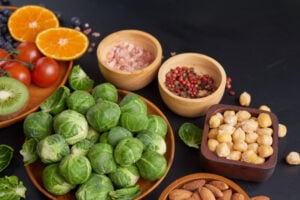
Iodine deficiency has been largely addressed in developed countries through iodized salt, but it remains a consideration for people who avoid salt, consume primarily sea salt without added iodine, or eat a diet low in iodine-containing foods. Seafood, including fish, shrimp, and shellfish, is among the best dietary sources of iodine. Dairy products contain meaningful amounts. Seaweed, particularly nori and kelp, is the most concentrated natural source, though kelp and high-dose seaweed supplements require caution in Hashimoto’s because excess iodine can aggravate autoimmune thyroid activity in susceptible individuals.
Eggs provide modest iodine alongside selenium, making them a practical thyroid-supportive food for most people. The goal is consistent, adequate iodine intake rather than sporadic high doses, which can be counterproductive in autoimmune thyroid disease.
Selenium Sources That Drive Thyroid Hormone Conversion
Brazil nuts are the most concentrated dietary selenium source available, with a single nut providing close to the daily recommended intake. Two to three Brazil nuts daily provides meaningful selenium without risking toxicity from excess supplementation. Fish, including tuna, sardines, and halibut, provide selenium alongside iodine and omega-3 fatty acids in a combination that is broadly supportive of thyroid function. Organ meats, eggs, and sunflower seeds also contribute meaningfully.
The important thing to understand about selenium is that the conversion deficiency it produces when inadequate is not visible on standard thyroid panels unless Free T3 and Reverse T3 are specifically measured. Many hypothyroid patients with apparently adequate T4 levels and stubbornly low T3 have undiagnosed selenium inadequacy at the root of the conversion problem.
Zinc and Tyrosine: The Building Blocks of T3 and T4
Zinc supports thyroid hormone receptor function and the enzymatic activity of thyroid hormone synthesis. Red meat, shellfish (particularly oysters), pumpkin seeds, and legumes are reliable dietary zinc sources. Plant-based zinc sources are less bioavailable due to phytate content, which is one reason vegetarians and vegans with hypothyroidism often benefit from supplemental zinc alongside dietary optimization.
Tyrosine, the amino acid component of thyroid hormone structure, is abundant in virtually all protein-containing foods, including poultry, fish, dairy, eggs, legumes, and nuts. Adequate dietary protein ensures tyrosine availability without requiring specific supplementation in most people eating enough total protein.
Iron-Rich Foods and Their Underappreciated Role
Iron deficiency is surprisingly common among women with hypothyroidism, partly because hypothyroidism impairs gut absorption and partly because many thyroid patients are premenopausal women with significant monthly iron losses. When thyroid peroxidase cannot function fully due to inadequate iron, T4 production slows at the synthesis step regardless of iodine availability. Red meat provides heme iron with the highest bioavailability. Dark leafy greens, legumes, and fortified foods provide non-heme iron, whose absorption is enhanced meaningfully by simultaneous vitamin C intake and impaired by calcium and tannins in tea and coffee.
A ferritin level below 70 nanograms per milliliter is associated with impaired thyroid function and hair loss even in the absence of frank anemia, and this specific marker is worth requesting alongside a standard thyroid panel in any patient with unexplained persistence of hypothyroid symptoms.
Anti-Inflammatory Foods That Protect Thyroid Tissue
Chronic inflammation drives the autoimmune attack on thyroid tissue in Hashimoto’s thyroiditis and impairs thyroid hormone conversion in even non-autoimmune hypothyroidism. Omega-3 fatty acids from fatty fish, walnuts, and flaxseed reduce pro-inflammatory prostaglandin production and support the anti-inflammatory environment that protects thyroid tissue. Colorful vegetables and berries provide polyphenols and antioxidants that reduce oxidative stress on thyroid cells. Turmeric, ginger, and other culinary anti-inflammatory spices add meaningful support through regular culinary use rather than supplement form.
Foods to Avoid With Hypothyroidism
Goitrogens: What They Are and When They Actually Matter
Goitrogens are compounds found naturally in cruciferous vegetables, including broccoli, kale, Brussels sprouts, cabbage, and cauliflower, that can interfere with iodine uptake and thyroid hormone synthesis when consumed in large amounts in raw form. The goitrogenic concern in cruciferous vegetables is frequently overstated in thyroid diet content. For people with adequate iodine intake, moderate consumption of cooked cruciferous vegetables does not meaningfully impair thyroid function. Cooking significantly reduces goitrogenic activity, and these vegetables provide extensive anti-inflammatory and detoxification-supporting benefits that are genuinely valuable for thyroid health.
The practical guidance is not to avoid cruciferous vegetables entirely but to prefer them cooked over raw in very large quantities, and to ensure iodine intake is adequate. People drinking large quantities of raw kale smoothies daily while iodine-deficient are the ones at meaningful risk, not people eating a serving of roasted broccoli with dinner.
Gluten and Hashimoto’s: The Autoimmune Connection
The relationship between gluten and Hashimoto’s thyroiditis has become one of the most clinically relevant dietary considerations in autoimmune thyroid disease. The molecular structure of gliadin, the protein component of gluten, shares structural similarities with thyroid tissue antigens in a way that can trigger molecular mimicry, where the immune response to gluten cross-reacts with thyroid tissue. Multiple studies have shown that a strict gluten-free diet reduces TPO antibody levels in Hashimoto’s patients, indicating a reduction in the autoimmune attack on thyroid tissue.
Not every hypothyroid patient has Hashimoto’s, and not every Hashimoto’s patient responds equally to gluten elimination. But for patients with elevated TPO antibodies who have not achieved adequate symptom control, a gluten-free trial of at least three months is among the most evidence-supported dietary interventions available and is often transformative for those who have an underlying gluten sensitivity driving their autoimmune activity.
Soy and Its Effect on Thyroid Hormone Absorption
Soy contains isoflavones that inhibit thyroid peroxidase activity and can interfere with the absorption of levothyroxine when consumed near the time of medication dosing. For people on thyroid medication, soy foods should be consumed well away from medication timing, at least two to four hours after levothyroxine. Soy’s effect on thyroid hormone production in people not on medication is more modest and primarily relevant for people with borderline iodine intake, since soy’s goitrogenic effects are meaningfully dependent on iodine status.
Ultra-Processed Foods and the Inflammatory Burden on the Thyroid
Refined sugars, seed oils high in omega-6 fatty acids, artificial additives, and the general inflammatory pattern of ultra-processed food consumption creates a systemic inflammatory burden that suppresses thyroid function through multiple pathways. Elevated inflammatory cytokines including IL-6 and TNF-alpha reduce TSH receptor sensitivity, decrease deiodinase enzyme activity, and promote the shunting of T4 conversion toward inactive Reverse T3 rather than active T3. Eliminating or dramatically reducing ultra-processed food intake is arguably the single highest-leverage dietary intervention available for the majority of hypothyroid patients, and it is also the one most consistently ignored in favor of discussions about specific superfoods.
The Hypothyroidism Diet and Blood Sugar Management
Why Insulin Resistance Compounds Thyroid Dysfunction
Insulin resistance and hypothyroidism share a bidirectional relationship that creates a self-reinforcing cycle when both are present. Hypothyroidism slows glucose metabolism and reduces insulin sensitivity. Insulin resistance elevates inflammatory markers that suppress thyroid function and impair T4-to-T3 conversion. Each condition makes the other worse, and treating the thyroid without addressing blood sugar dysregulation produces incomplete results.
Managing blood sugar through reduced refined carbohydrate intake, adequate dietary fiber, and regular physical activity is not simply general health advice for thyroid patients. It is a specific intervention on one of the most significant perpetuating factors in the hypothyroid pattern.
Meal Timing and Carbohydrate Quality for Thyroid Health
Avoiding prolonged fasting and blood sugar crashes matters specifically for thyroid health because hypoglycemic episodes activate the stress response, elevate cortisol, and directly suppress thyroid hormone production and conversion. Skipping breakfast or engaging in extended fasting without adequate metabolic health is not universally beneficial for thyroid patients despite the popularity of fasting protocols in general wellness spaces.
Prioritizing complex carbohydrates from whole food sources, including root vegetables, legumes, and whole grains, over refined carbohydrates stabilizes blood sugar, supports microbiome diversity relevant to gut-based T3 conversion, and provides the B vitamins, magnesium, and zinc that thyroid metabolism requires.
Herbal and Nutritional Support That Works Alongside a Thyroid Diet
Ashwagandha and Adaptogenic Support for Thyroid Function
Ashwagandha has clinical trial evidence for modest increases in T3 and T4 levels alongside its well-documented cortisol-lowering effects, making it particularly relevant for hypothyroid patients whose thyroid suppression has a significant stress and adrenal component. Since cortisol directly inhibits T4-to-T3 conversion and promotes Reverse T3 production, any botanical that genuinely reduces HPA axis hyperactivity has secondary thyroid-supporting effects beyond any direct thyroid action.
Patients using a thoughtful herbal medicine approach in Bend often find that adaptogenic support works as a meaningful complement to dietary optimization and, where needed, thyroid medication, addressing the stress dimension of thyroid dysfunction that neither diet nor medication specifically targets.
Selenium, Zinc, and Vitamin D Supplementation in Context
Dietary optimization is the foundation, but targeted supplementation fills specific gaps that diet alone may not close. Selenium at 100 to 200 micrograms daily is the most evidence-supported thyroid supplement for both conversion support and TPO antibody reduction in Hashimoto’s. Zinc at 15 to 30 milligrams daily addresses a deficiency that is both common in thyroid patients and consequential for hormone synthesis and receptor function. Vitamin D at doses sufficient to bring serum levels to 50 to 80 nanograms per milliliter supports immune regulation and reduces autoimmune thyroid activity in Hashimoto’s patients with vitamin D insufficiency, which describes a majority of patients tested in clinical practice.
Practical Meal Planning for the Hypothyroidism Diet
A Day of Eating for Thyroid Support
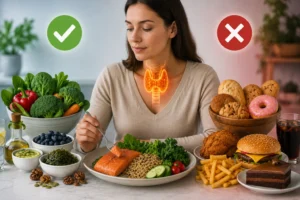
A practical thyroid-supportive day of eating builds each meal around a quality protein source, non-starchy and colorful vegetables, a moderate amount of complex carbohydrate from whole food sources, and healthy fats including omega-3 rich options. Breakfast might include eggs with sauteed spinach, a small portion of smoked salmon for iodine and selenium, and berries for antioxidant polyphenols. Lunch could include a large salad with grilled chicken or sardines, a variety of colorful vegetables, olive oil, and a portion of lentils for iron and zinc. Dinner built around a palm-sized serving of red meat or fish with roasted root vegetables and steamed broccoli (cooked, not raw) covers the key mineral bases effectively.
Snacks like a small handful of Brazil nuts with pumpkin seeds provide selenium and zinc without creating blood sugar spikes. Avoiding caffeine near thyroid medication timing, staying well hydrated, and eating consistent meals rather than skipping them supports the stable metabolic environment thyroid function benefits from.
What to Do When Your Diet Is Right But Symptoms Persist
A consistently optimized diet is necessary but sometimes not sufficient for full resolution of hypothyroid symptoms. If fatigue, hair loss, weight management difficulty, brain fog, or other thyroid symptoms persist despite genuine dietary improvements, the most productive next step is a comprehensive thyroid panel, not just TSH, combined with an assessment of nutritional status for the key minerals discussed throughout this article. Subclinical conversion impairment, undiagnosed Hashimoto’s, or nutrient deficiencies that dietary changes have not fully corrected are the most common explanations for persistence of symptoms in people who are genuinely eating well.
For patients in Bend seeking this level of comprehensive evaluation, a detailed consultation covering diet, testing, and integrative treatment options as part of thorough hypothyroidism care near me in Bend provides the clinical depth that getting the full picture requires.
A Note on How This Article Was Created
This article was written to give people with hypothyroidism a genuinely useful, clinically grounded understanding of how diet shapes thyroid function and what specific dietary changes are most evidence-supported. The clinical perspectives throughout reflect Dr. Drew Collins’ direct patient care experience in naturopathic thyroid medicine over more than four decades. This content is educational and is not a substitute for an individualized medical evaluation. A direct consultation with Dr. Collins or another qualified thyroid specialist is the appropriate next step for personalized dietary and clinical guidance.
Conclusion
The best diet for hypothyroidism is one that provides adequate iodine, selenium, zinc, and iron to support every step of thyroid hormone synthesis and conversion, reduces the inflammatory burden that suppresses thyroid function, supports gut health that drives peripheral T3 production, and manages blood sugar stability to protect against the cortisol-driven thyroid suppression that blood sugar dysregulation produces.
This is not a complicated or restrictive eating pattern. It is whole food eating with specific attention to the nutrients thyroid function depends on and specific avoidance of the dietary patterns that most consistently undermine it. When dietary optimization is combined with appropriate nutritional and herbal support, and comprehensive clinical evaluation where symptoms persist, most thyroid patients discover substantially more capacity for symptom resolution than their initial diagnosis and treatment suggested was possible.
Frequently Asked Questions
Do I need to avoid all cruciferous vegetables with hypothyroidism?
No. The goitrogenic concern with cruciferous vegetables is real but significantly overstated in most thyroid diet content. Cooking cruciferous vegetables reduces their goitrogenic activity substantially. People with adequate iodine intake can eat cooked cruciferous vegetables freely without meaningful thyroid impact. The specific scenario to avoid is consuming very large amounts of raw cruciferous vegetables, such as several large daily raw kale smoothies, particularly when iodine intake is marginal. Roasted broccoli, steamed Brussels sprouts, and cooked cabbage are not thyroid threats for adequately iodine-nourished people.
Should everyone with hypothyroidism go gluten-free?
Not necessarily everyone, but anyone with Hashimoto’s thyroiditis and persistent symptoms despite treatment deserves a serious gluten-free trial of at least three months. The molecular mimicry between gliadin and thyroid antigens means that immune reactivity to gluten can directly amplify the autoimmune attack on thyroid tissue in susceptible individuals. Testing for celiac disease and non-celiac gluten sensitivity before committing to permanent elimination is reasonable, but the standard celiac antibody panel misses a significant proportion of gluten-reactive individuals who do not have celiac disease. Clinical response to elimination is often more informative than testing alone.
How long does dietary optimization take to produce measurable thyroid improvements?
Improvements in nutritional status that affect thyroid function operate on different timelines depending on which specific deficiency is being addressed. Selenium repletion through Brazil nuts or supplementation typically produces measurable improvements in Free T3 levels within four to eight weeks. Ferritin replenishment takes longer, often three to six months, depending on severity and whether supplemental iron is being used. Anti-inflammatory dietary changes that reduce TPO antibodies in Hashimoto’s typically show measurable progress within three to six months of consistent implementation. Thyroid dietary changes should be viewed as a months-long commitment rather than a week-long experiment.
Can diet alone manage hypothyroidism without medication?
For some people with mild, subclinical hypothyroidism and an underlying nutritional cause, comprehensive dietary optimization and targeted supplementation can bring thyroid function back to a range where medication is not required. For people with autoimmune thyroid disease that has caused significant loss of functional thyroid tissue, or with TSH levels indicating more substantial thyroid insufficiency, diet optimizes function and improves how medication works but typically does not replace the need for thyroid hormone supplementation. The goal of dietary and nutritional optimization is to make whatever thyroid function remains work as efficiently as possible, and to support medication to work at the lowest effective dose needed.
Is intermittent fasting beneficial or harmful for hypothyroidism?
This is highly individual. Extended fasting activates the stress response, elevates cortisol, and can suppress thyroid hormone conversion toward Reverse T3, particularly in people who are already metabolically stressed or adrenally compromised. For people with well-managed metabolic health and no significant adrenal component to their thyroid dysfunction, moderate time-restricted eating may be tolerated or even beneficial. For people with fatigue, poor cortisol regulation, or insulin instability, extended fasting tends to worsen thyroid function rather than improve it. Discussing any significant dietary structure change with a thyroid-informed provider before implementing it is the safest approach.
For a broader look at this kind of care, see Hormone Doctor in Bend, OR.
Further reading
- Hypothyroidism diet: Can certain foods increase thyroid function?, Mayo Clinic. Covers iodine needs and foods and supplements that can interfere with thyroid medicine.
- Diet for Hypothyroidism: What To Eat and Avoid, Cleveland Clinic. Practical guidance on selenium-rich foods, soy timing, cruciferous vegetables and supplements to skip.
Want to talk this through for your own health? Book a visit with Dr. Drew Collins, ND at 601 NW Harmon Blvd in Bend, or call (858) 333-5196.