
If you have an autoimmune disease, you have probably seen long lists of “immune-balancing” supplements. Most of them rest on lab studies. A few have real human trials behind them. The best-supported options right now are vitamin D, omega-3 fish oil, selenium for Hashimoto’s thyroiditis and curcumin for rheumatoid arthritis, and even those work alongside medical treatment, not instead of it. This guide ranks the common supplements for autoimmune disease by the strength of the evidence, lists the ones that can backfire and explains how to use them safely.
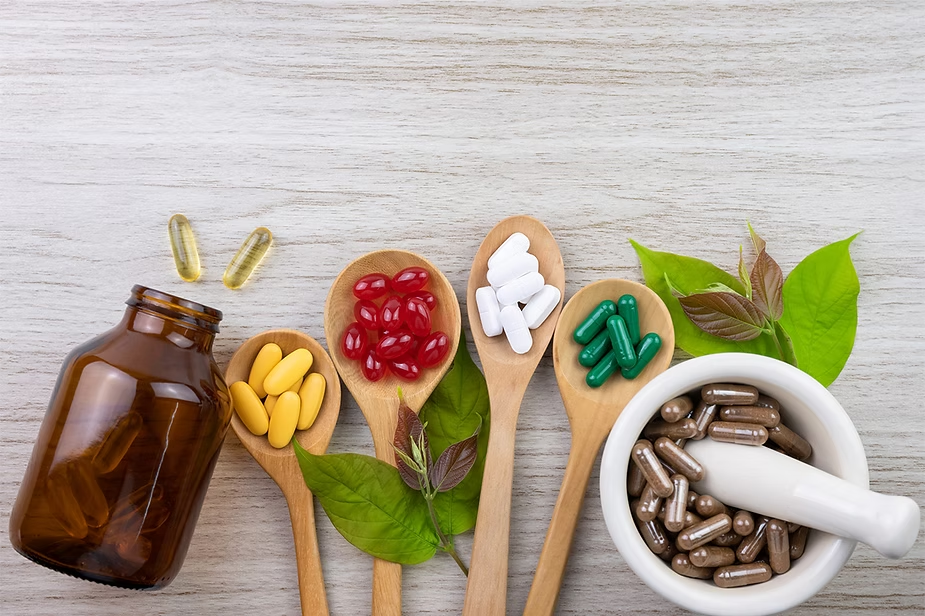
Can supplements help autoimmune disease?
Autoimmune diseases happen when the immune system attacks the body’s own tissue. Rheumatoid arthritis, lupus, Hashimoto’s thyroiditis, psoriasis, celiac disease, Sjögren’s disease and multiple sclerosis all fall in this group. Each one behaves differently, and a supplement that helps one may do nothing for another.
Supplements can help in three realistic ways:
- Correcting a deficiency that is common with the disease or its treatment, such as low vitamin D.
- Modestly improving symptoms or lab markers alongside standard treatment.
- Possibly lowering the chance of developing autoimmune disease in the first place, which so far has the best evidence for vitamin D.
What they cannot do is “calm an overactive immune system” the way prescription disease-modifying drugs can. Anyone selling that promise is overselling. Stopping a prescribed medication in favor of supplements can lead to flares and permanent damage, particularly in rheumatoid arthritis and lupus.
Best supplements for autoimmune disease, ranked by evidence
1. Vitamin D
Of the supplements on this list, vitamin D has the strongest prevention data. In the VITAL trial, published in The BMJ in 2022, 25,871 US adults (men 50 and older and women 55 and older) took 2,000 IU of vitamin D a day or a placebo for a median of 5.3 years. Confirmed autoimmune disease was 22% lower in the vitamin D group. The diseases tracked included rheumatoid arthritis, polymyalgia rheumatica, autoimmune thyroid disease and psoriasis.
That study tested prevention in older adults, not treatment of existing disease. Still, low vitamin D is common in people with autoimmune conditions and in those taking steroids, and NIH’s Office of Dietary Supplements (ODS) notes that steroids can lower vitamin D levels. It makes sense to check a blood level and correct it.
Safety: The adult upper limit is 4,000 IU (100 mcg) a day from all sources unless your clinician prescribes more and monitors you. Too much can cause nausea, weakness, confusion and, at very high doses, kidney failure and heart rhythm problems. Vitamin D can interact with thiazide diuretics, statins, steroids and the weight-loss drug orlistat, according to ODS.
2. Omega-3 fish oil
In the same VITAL trial, 1,000 mg a day of marine omega-3s lowered autoimmune disease by 15%, but that result was not statistically significant. For people who already have rheumatoid arthritis, a 2024 meta-analysis of 18 randomized trials (1,018 patients) in Clinical Rheumatology found omega-3s reduced tender joint counts and triglycerides. ODS puts it this way: omega-3s “may help manage RA when taken together with standard RA medications,” and some people may need less pain medication, but it is unclear whether they reduce joint pain, swelling or morning stiffness.
Safety: Side effects are usually mild, such as fishy taste, heartburn, nausea and diarrhea. High doses may raise bleeding risk with warfarin and other blood thinners.
3. Selenium for Hashimoto’s thyroiditis
Selenium is one of the few supplements with solid, disease-specific data. A 2024 systematic review and meta-analysis in Thyroid pooled 35 studies. In people with Hashimoto’s who were not yet on thyroid hormone, selenium lowered TSH. It also lowered thyroid peroxidase antibodies (TPOAb) whether or not people took thyroid hormone, with side effects similar to placebo. The authors rated the certainty of evidence as moderate.
Lower antibodies are not the same as reversing the disease, and selenium did not change thyroid hormone levels in that analysis. It is a reasonable, low-cost add-on to discuss with whoever manages your thyroid.
Safety: More is not better. ODS sets the adult upper limit at 400 mcg a day from all sources. Signs of too much include garlic breath, a metallic taste, hair loss, brittle nails, rash and nausea.
4. Curcumin for rheumatoid arthritis
Two 2025 meta-analyses looked at curcumin in rheumatoid arthritis. One in Medicine (7 trials) found lower disease activity scores, rheumatoid factor, ESR and CRP. One in Frontiers in Immunology (6 trials, 244 people) also found benefits, but graded the certainty of evidence as very low. So the trials are small, and their results vary. Curcumin may be worth a trial alongside standard care, not as a replacement.
Safety: The National Center for Complementary and Integrative Health (NCCIH) says plain turmeric or curcumin is likely safe in recommended amounts for 2 to 3 months, with nausea, reflux and diarrhea as common side effects. It also warns that liver damage has been reported with “bioavailable” curcumin formulations designed for better absorption. Watch for fatigue, dark urine or yellowing skin, and avoid turmeric supplements during pregnancy.
5. Probiotics
Gut bacteria clearly interact with the immune system, and that has made probiotics popular for autoimmune conditions. The human evidence is still mixed. NCCIH notes that probiotics show some benefit for keeping ulcerative colitis in remission, while 14 studies in Crohn’s disease did not find benefit.
Safety: NCCIH says the risk of harmful effects is greater in people with severe illness or compromised immune systems. If you take biologics, high-dose steroids or other immunosuppressants, ask your prescriber before starting a probiotic.
6. Supplements with weaker evidence
These show up on most autoimmune supplement lists. The research is early, small or not specific to autoimmune disease.
- Magnesium and zinc. Worth correcting if you are low, but there is no good evidence that extra amounts treat autoimmune disease.
- N-acetylcysteine (NAC). An antioxidant with early research in autoimmune conditions. Promising in theory, not established.
- Antioxidant blends (vitamins C and E, alpha-lipoic acid). Can improve oxidative stress markers in lab tests, which does not necessarily mean fewer symptoms.
- L-arginine. We no longer include it as a recommendation. There is not enough evidence for autoimmune disease.
Supplements that may make autoimmune disease worse
Some products marketed to “boost” immunity are a poor fit for an immune system that is already attacking the body.
- Astragalus. NCCIH advises people with autoimmune diseases to avoid it because it might worsen symptoms. More in our astragalus tea guide.
- Echinacea. Taken to stimulate immune activity, so a cautious approach is to avoid it with autoimmune disease. See our echinacea tea article.
- Megadose vitamins. Vitamin D above the upper limit without monitoring, or selenium above 400 mcg a day, can cause real harm.
- Biotin (hair and nail supplements). ODS notes that even a single 10 mg dose has interfered with thyroid function tests taken within 24 hours, producing falsely low TSH. If you have Hashimoto’s, tell your clinician about biotin before lab work.
How to use supplements safely with autoimmune disease
- Test before you take. Vitamin D, B12, iron and thyroid labs tell you what you actually need.
- Add one supplement at a time. Give it 8 to 12 weeks and track symptoms or labs so you know whether it is doing anything.
- Tell every prescriber. Bring the bottles to appointments. Interactions with blood thinners, immunosuppressants and thyroid testing are the big ones to check.
- Buy third-party tested products. Look for USP or NSF certification. The FDA does not approve supplements before they are sold.
- Keep the basics. Sleep, not smoking, regular movement and a mostly whole-food diet matter for inflammation, and none of them come in a capsule.
For a closer look at inflammation research, read supplements with real evidence for autoimmune inflammation, and for the bigger picture, a root cause approach to autoimmune conditions.
Frequently asked questions
What is the best supplement for autoimmune disease?
There is no single best one. Vitamin D has the strongest evidence overall, from a 5-year trial of nearly 26,000 adults that found 22% less autoimmune disease. Selenium is the best-studied option for Hashimoto’s, and omega-3s and curcumin have the most data for rheumatoid arthritis.
What vitamins are good for autoimmune disease?
Vitamin D is the main one. Vitamin B12 and iron are worth checking in people with autoimmune thyroid disease, celiac disease or pernicious anemia, because deficiencies are common. Supplement based on lab results rather than guessing.
Are there supplements to calm an overactive immune system?
No supplement reliably calms an overactive immune system the way prescription treatment does. Vitamin D, omega-3s, selenium and curcumin can modestly improve risk, symptoms or markers in specific conditions. Avoid “immune boosters” such as astragalus and echinacea.
What is the best natural supplement for autoimmune disease?
Among plant-based options, curcumin has the most trial data, mainly in rheumatoid arthritis, but the evidence is low certainty and bioavailable forms carry a liver-injury warning from NCCIH.
Can I take supplements with my autoimmune medications?
Often yes, but check first. Fish oil and blood thinners, probiotics and immunosuppressants, and biotin and thyroid labs are pairings to check.
How long do supplements take to work?
Most trials ran from 3 months to several years. Give a supplement at least 8 to 12 weeks with a clear way to measure it before deciding.
Autoimmune care in Bend, Oregon
At Proactive Choice, Dr. Drew Collins, ND, works with patients who want to add nutrition and supplements to their autoimmune care without stepping away from their rheumatologist or endocrinologist. That usually starts with lab testing and a review of every medication and supplement you take. Learn more about our integrative medicine approach, our hypothyroidism care for Hashimoto’s and our bio-medical nutrition services.
Proactive Choice is at 601 NW Harmon Blvd #10, Bend, OR 97703. Patients elsewhere in Oregon can ask about telemedicine visits, including from Eugene and Salem. Call (858) 333-5196 or book a consultation online.
This article is general education, not medical advice. Do not stop or change prescribed medication without talking to the clinician who prescribed it.
Want to talk this through for your own health? Book a visit with Dr. Drew Collins, ND at 601 NW Harmon Blvd in Bend, or call (858) 333-5196.