
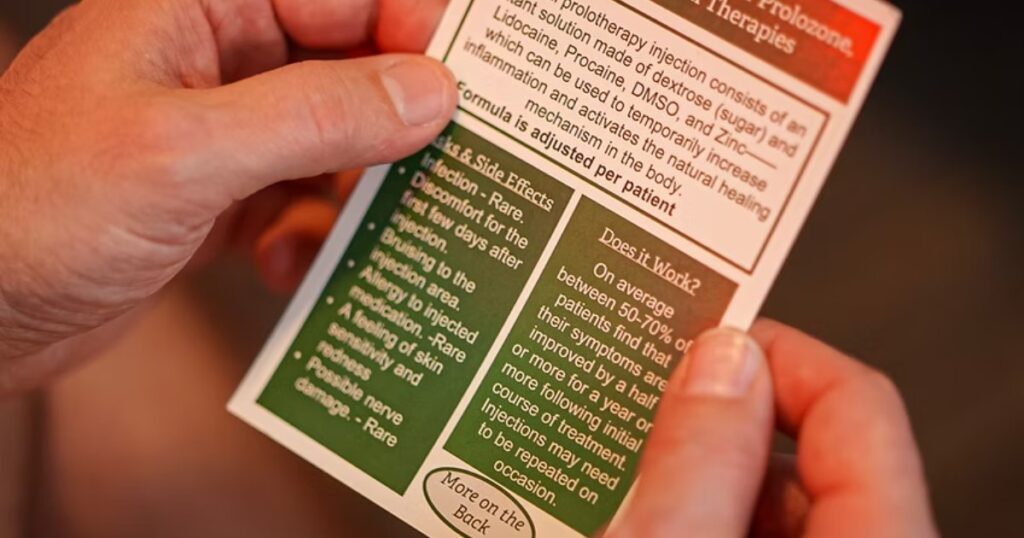
Prolozone combines the proliferative injection technique of classic prolotherapy with ozone gas, and it is marketed with real enthusiasm by the clinics that offer it. The clinical trial evidence, while genuinely encouraging in places, tells a more measured story than most of that marketing suggests.
Quick Answer: Prolozone is an injection technique combining ozone-oxygen gas with procaine, vitamins, minerals, and sometimes other proliferative agents, injected into joints, discs, or areas of chronic pain. Randomized controlled trials specifically on intra-articular ozone for knee osteoarthritis show it performs comparably to hypertonic saline injection, dextrose prolotherapy, and hyaluronic acid, and better than placebo, in the short term. A 2019 systematic review in Pain Physician concluded ozone therapy can be a safe and effective treatment for degenerative joint disease but emphasized the need for larger, higher-quality trials. Prolozone using the exact combined technique (ozone plus procaine and other agents together) has not itself been directly studied in published clinical trials; the trial evidence available covers intra-articular ozone injection specifically, a closely related but not identical protocol.
What Prolozone Actually Is
Developed by Dr. Frank Shallenberger, prolozone combines principles from neural therapy, classical prolotherapy, and ozone therapy. A typical injection includes procaine (a local anesthetic), anti-inflammatory and homeopathic agents, vitamins, minerals, proliferative substances, and ozone-oxygen gas, delivered into degenerated or injured joints, discs, or painful soft tissue. The proposed mechanism centers on ozone’s ability to directly stimulate oxygen utilization in damaged tissue, addressing what proponents describe as a core reason chronically injured areas fail to heal on their own.
What the Clinical Trials Actually Show
This is where precision matters. The randomized controlled trial evidence available is for intra-articular ozone injection, not the full multi-agent prolozone protocol combining ozone with procaine and other additives. A 2015 trial found ozone injections produced similar efficacy to hyaluronic acid for knee osteoarthritis. A 2021 randomized trial published in Evidence-Based Complementary and Alternative Medicine compared intra-articular ozone-plus-hypertonic-saline against hypertonic saline alone in 34 adults with knee osteoarthritis, finding both groups improved meaningfully on pain and function scores, with no statistically significant difference between them, a genuinely mixed result rather than a clear win for the ozone component specifically.
A broader review of the randomized trial literature found the short-term effectiveness of intra-articular ozone exceeds placebo and corticosteroid injections, and roughly matches dextrose prolotherapy and hyaluronic acid injections. However, that same review noted ozone’s relative advantage narrows by 3 to 6 months post-injection, and that beyond 6 months, ozone was not associated with significant improvement in range of motion or functionality in the studies reviewed.
By the Numbers
- A 2021 randomized trial of 34 adults with knee osteoarthritis found ozone plus hypertonic saline performed no differently than hypertonic saline alone (p = 0.734 for the primary pain outcome).
- Short-term intra-articular ozone effectiveness is better than placebo and corticosteroids, and roughly equal to dextrose prolotherapy or hyaluronic acid, per a review of the available randomized trials.
- By 6 months post-injection, ozone’s therapeutic effect was found to be slightly lower than dextrose prolotherapy or hyaluronic acid in the same review.
- A 2019 systematic review in Pain Physician concluded ozone therapy can be safe and effective for degenerative joint disease, while explicitly calling for larger, higher-quality randomized trials.
Pros and Cons of Prolozone
Reasonable Case For It
- Randomized trials on the ozone injection component show real short-term benefit for knee osteoarthritis
- Comparable short-term performance to more established options like hyaluronic acid and dextrose prolotherapy
- Ozone’s antimicrobial and anti-inflammatory mechanisms have genuine biochemical grounding
- Generally low reported rate of significant side effects in the trial literature
Reasons for Caution
- The exact multi-agent prolozone protocol has not itself been directly studied in published trials
- Benefit relative to comparators appears to narrow within 3 to 6 months in the available research
- Not FDA-approved and not covered by Medicare or commercial insurance
- Sterility of ozone-generating equipment varies by provider, with rare but serious infection risk reported anecdotally when protocols are not followed carefully
Myth vs. Fact
Myth: “Prolozone, exactly as practiced in clinics, has been proven effective in randomized clinical trials.”
Fact: The randomized trials available study intra-articular ozone injection specifically, a related but narrower intervention than the full combined prolozone protocol involving procaine and other additives alongside ozone.
Myth: “Prolozone works better than standard treatments like hyaluronic acid.”
Fact: The trial evidence shows comparable short-term effectiveness to hyaluronic acid and dextrose prolotherapy, not clear superiority, and ozone’s relative benefit appears to narrow somewhat over the following months.
Myth: “Since ozone has antimicrobial properties, infection risk from the injection itself is not a real concern.”
Fact: Ozone-generating equipment is not universally sterile, and serious infections following disc or joint injection have been reported when equipment or technique fell short of proper sterile protocol. Provider experience and equipment quality genuinely matter.
Who Might Reasonably Consider Prolozone
Based on the available evidence, prolozone is most reasonably considered for chronic joint pain, particularly knee osteoarthritis, in patients who have not achieved lasting relief from conservative treatment and are looking for a non-surgical option with a generally favorable short-term safety profile. It is not a guaranteed cure, and the current evidence supports realistic expectations around short-to-intermediate term symptom relief rather than permanent joint regeneration. For back or disc-related pain specifically, our companion guide to prolotherapy for chronic back pain covers a closely related technique in more depth.
Getting an Honest Recommendation
Whether prolozone is a reasonable option for your specific joint pain depends on your diagnosis, prior treatments, and goals. Our ozone therapy services at Proactive Choice include a straightforward conversation about what the evidence actually supports for your situation. Schedule a consultation or call +1 (858) 333-5196.
Frequently Asked Questions
Does prolozone actually regenerate joint tissue?
The available randomized trials measure pain and function outcomes rather than confirmed structural tissue regeneration. Improvement in symptoms is well documented in the short term; structural regeneration claims are less directly supported by the current trial evidence.
How is prolozone different from regular prolotherapy?
Classic prolotherapy typically uses a hypertonic dextrose solution alone. Prolozone adds ozone-oxygen gas along with procaine and other agents, based on the theory that ozone’s oxygen-utilization effects add benefit beyond the proliferative solution alone.
How many prolozone sessions are typically needed?
Clinical trial protocols generally used a series of weekly injections over several weeks rather than a single treatment, though exact protocols vary by provider and condition.
Is prolozone covered by insurance?
No. Prolozone is not FDA-approved and is not typically covered by Medicare or commercial health insurance, so it is generally offered as a self-pay treatment.
How long does pain relief from prolozone typically last?
Available research suggests the benefit relative to comparator treatments is strongest in the short term and narrows somewhat by 3 to 6 months, though individual results vary and larger trials are still needed to establish more precise timelines.
Explore Regenerative Injection Therapies at Proactive Choice in Bend
Proactive Choice in Bend, Oregon offers ozone-based and regenerative injection therapies under Dr. Drew Collins, ND, with evidence-based guidance on realistic outcomes:
- Ozone Therapy Bend, OR: The full range of ozone-based treatment options
- Prolotherapy Bend, Oregon: Natural joint repair without surgery
- PRP vs. Prolotherapy: How these regenerative options compare
Proactive Choice is located in Bend, Oregon and serves patients throughout Central Oregon including Redmond, Sisters, La Pine, and Sunriver. Call +1 (858) 333-5196 or schedule a consultation online.
Further reading
- An investigation into the efficacy of intra-articular ozone (O2–O3) injection in patients with knee osteoarthritis: a systematic review and meta-analysis, NCBI PubMed Central (NIH). Pooled trials show short-term knee pain relief from ozone injections that fades after three months.
- Prolotherapy: What It Is, Uses & Side Effects, Cleveland Clinic. How prolotherapy injections work, what they are used for, and the mixed research.
- The Effects of Prolotherapy With Hypertonic Dextrose Versus Prolozone (Intraarticular Ozone) in Patients With Knee Osteoarthritis, NCBI PubMed Central (NIH). A clinical trial comparing dextrose prolotherapy with ozone injections for knee arthritis.
Want to talk this through for your own health? Book a visit with Dr. Drew Collins, ND at 601 NW Harmon Blvd in Bend, or call (858) 333-5196.