
Men make estradiol every day by converting a small share of their testosterone into it, and they need it for sex drive, erections and sperm production. High estradiol in men becomes a problem when the level climbs past what the body uses, and the most common visible sign is swollen or tender breast tissue. This guide covers what counts as high, what pushes it up, how to get a test you can trust, and what fixing it looks like at an overview level.
Quick answer: High estradiol in men means a level above the lab’s adult male range, which Cleveland Clinic lists as 10 to 42 pg/mL. It can cause breast tissue growth, low sex drive, erection problems and infertility. Common drivers are excess body fat, heavy drinking, liver disease, some medications and testosterone therapy. Confirm it with a sensitive test, then treat the cause.
What estradiol does in men
Estradiol is a form of estrogen, and it is a normal male hormone. Cleveland Clinic explains that a male body converts small amounts of androgens like testosterone into estrogen. Medical News Today lists what men use it for: regulating sex drive, getting erections, making sperm and keeping the testicles working, plus a hand in bone health, cholesterol and heart function.
Men need it.
The clearest evidence comes from a 2013 trial in the New England Journal of Medicine. Researchers gave 198 healthy men aged 20 to 50 a medicine that shut down their own hormone production, then added back placebo or different amounts of testosterone for 16 weeks, and a second group of 202 men also got a drug that blocked the conversion of testosterone into estradiol. The authors concluded that missing testosterone mainly cost the men lean mass, muscle size and strength, while missing estrogen drove fat gain, and that both deficiencies contributed to weaker sexual function.
That finding is the reason this article treats estradiol as a number to keep in range. Pushing it as low as possible is its own mistake.
Estradiol levels in men: what counts as high
Cleveland Clinic gives a reference range of 10 to 42 pg/mL for males 18 and older. Medical News Today cites a slightly wider 10 to 50 pg/mL from medical centers and notes that a healthy level depends on age and health history. Your lab report will print its own range, and that is the one your result should be read against.
Where do symptoms start? A 2025 review of testosterone therapy side effects in the International Brazilian Journal of Urology says serum estradiol above 60 pg/mL may cause gynecomastia, the medical term for enlarged male breast tissue. Plenty of men sit a little above their lab’s upper limit and feel nothing, so a number just over the line is a reason to look closer, not a diagnosis on its own.
High estrogen in men symptoms
The symptoms are vague. Most of them also show up with low testosterone, and a few show up with low estradiol, so the list below is a reason to test rather than a way to self-diagnose.
| Symptom | What it looks like | Other common explanations |
|---|---|---|
| Breast tissue growth (gynecomastia) | Swelling, pain or tenderness under one or both nipples | Low testosterone, certain medications, liver or kidney failure |
| Lower sex drive | Less interest in sex than usual for you | Low testosterone, and also estradiol that is too low |
| Erectile dysfunction | Trouble getting or keeping an erection | Low testosterone or low estradiol |
| Infertility | Trouble conceiving with a partner | Many male and female factors |
| Mood changes | Irritability or low mood | Too common to pin on one hormone |
| Dry skin | Skin that feels drier than it used to | Too common to pin on one hormone |
Cleveland Clinic’s high estrogen page lists decreased sex drive, dry skin, enlarged breasts, erectile dysfunction and infertility for males. Medical News Today adds mood changes. Mayo Clinic’s gynecomastia page says to see a clinician for breast swelling, pain or tenderness, discharge from one or both nipples, a firm lump, or dimpled skin over the area.
There is a longer-term reason to take this seriously. Breastcancer.org reports on a 2015 study in which men with the highest estrogen levels were about 2.5 times more likely to develop breast cancer than men with the lowest levels.
What causes high estradiol in men
Most cases trace back to one of a handful of causes, and more than one can stack up in the same man.
Body fat
Adipose tissue makes estrogen, according to Cleveland Clinic, so more body fat means more conversion. Breastcancer.org adds a caveat worth knowing: some research suggests obesity raises estrogen without pushing it above the normal range. Weight and hormones pull on each other in both directions, which is covered in more detail in our post on low testosterone and weight gain.
Alcohol and the liver
The liver clears estrogen. Heavy drinking reduces the body’s ability to break estrogen down, per Cleveland Clinic, and liver dysfunction does the same. Liver trouble shows up on all three cause lists: liver dysfunction for Cleveland Clinic, cirrhosis for Breastcancer.org, and liver failure and cirrhosis for Mayo Clinic. Mayo also names alcohol by itself as a cause of breast enlargement in men.
Medications and substances
Cleveland Clinic lists hormone therapy as a cause of high estrogen. Mayo Clinic’s list of drugs linked to male breast growth is longer: anabolic steroids used to build muscle, anti-androgens used for an enlarged prostate, some HIV medicines, some antidepressants, some heart medicines, opioids and certain antibiotics, along with marijuana and amphetamines. Never stop a prescribed medicine on your own because of this list. Take it to the prescriber.
Other medical conditions
Breastcancer.org lists diabetes, an overactive thyroid, adrenal gland tumors and testicular tumors, plus aromatase excess syndrome, a rare genetic condition. Cleveland Clinic adds long-running stress and high cortisol. These are less common than the causes above, but tumors are the reason a sudden, unexplained rise gets a proper workup.
Testosterone therapy
More testosterone in the blood means more raw material for conversion. The 2025 urology review describes estradiol accumulating during testosterone therapy in some men, which is why estradiol belongs on a TRT lab panel even though not every man on treatment runs high.
Does TRT raise estrogen?
It can. Whether it does, and by how much, varies from man to man.
The two main guidelines say surprisingly little about it. The American Urological Association guideline, first published in 2018 and confirmed in 2024, says in Statement 9 (expert opinion) that serum estradiol should be measured in testosterone deficient patients who present with breast symptoms or gynecomastia before starting testosterone therapy. Its only other mention of estrogen blockers is as one option for men on treatment who want to keep their fertility. The Endocrine Society’s 2018 monitoring plan centers on testosterone levels, hematocrit and PSA, with a check at 3 to 12 months after starting and then yearly.
Neither guideline gives a target estradiol number for a man on treatment. So the clinician is left weighing symptoms, the trend across repeat labs and the risk of pushing estradiol too low, and reasonable clinicians land in different places on that.
When estradiol does run high on treatment, the 2025 review describes adjusting the testosterone plan or adding an estrogen-lowering medicine. It also notes that breast growth without raised estrogen sometimes goes away on its own, so waiting and watching can be reasonable in that case. Those calls belong to the clinician who has your full labs.
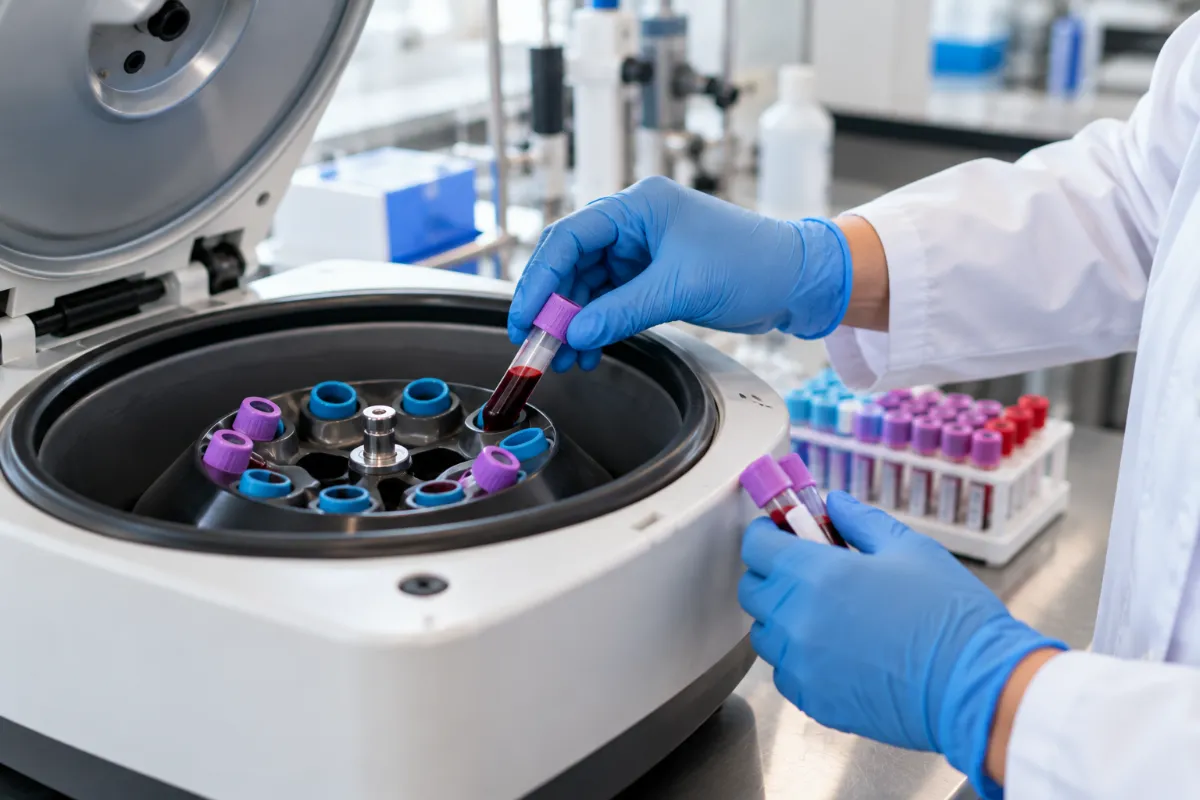
Testing estradiol: when it is worth it and why the method matters
This is the part most articles skip, and it changes how you read a result.
The Association for Diagnostics and Laboratory Medicine (ADLM) says estradiol in men should be measured with a sensitive LC/MS assay, a mass spectrometry method, and that clinicians should not order estradiol by immunoassay on men. Immunoassays tend to overestimate low concentrations and are generally only suitable above about 50 pg/mL. Adult men normally sit well below that, so a routine immunoassay can print a high number for a man whose true level is normal.
Our position is simple. One high estradiol result from an immunoassay is a reason to retest with the right method, not a reason to start lowering anything.
ADLM says testing makes sense for men with signs of estradiol excess (mainly breast tissue growth), for suspected hormone-secreting adrenal, liver or testicular tumors, and for suspected estradiol deficiency. It also warns that an estradiol result alone does not point to a specific disease. It needs context: total and free testosterone, SHBG, LH and FSH. Our guide to which hormone tests matter explains how those markers fit together. At Proactive Choice, a full panel typically includes free testosterone, SHBG, estradiol, LH and FSH, plus a standard metabolic panel.
How to lower estrogen in men: an overview
The fix depends on the cause, so the order matters. Cause first. Then treatment.
Cleveland Clinic’s list of general approaches starts with the basics: losing excess weight, cutting back on alcohol, managing stress, reviewing medications with the prescriber and limiting exposure to environmental estrogen-like chemicals. Medical News Today notes that research on lifestyle changes for estrogen in men is still incomplete, which is fair. Weight loss and drinking less are still the steps with the clearest mechanism behind them, since fat tissue makes estrogen and the liver clears it.
Prescription options exist, including aromatase inhibitors, which block the conversion of testosterone to estradiol, and selective estrogen receptor modulators. Whether any of them fits a given man is a clinician’s decision based on confirmed labs and symptoms, and we do not recommend any specific drug here. The 2013 trial is the warning on this point: when estradiol was blocked, the men gained fat and sexual function suffered. Driving estradiol too low trades one problem for another.
If a tumor or liver disease is behind the rise, treating that condition comes first.
Frequently asked questions
What is a normal estradiol level for a man?
Cleveland Clinic lists 10 to 42 pg/mL for males 18 and older, and Medical News Today cites 10 to 50 pg/mL. Labs set their own ranges, so read your result against the range printed on your report. The test method matters too: an LC/MS assay is the accurate choice for men, while a standard immunoassay can overestimate low levels and make a normal result look high.
Can high estrogen in men be reversed?
Often, yes, when the cause is found and treated. Excess body fat, heavy drinking and some medications are common causes that can change. Breast tissue growth without raised estrogen sometimes resolves on its own, according to a 2025 urology review. Tumors, liver disease and thyroid problems need their own treatment first.
Does alcohol raise estrogen in men?
Heavy drinking can. Cleveland Clinic says excess alcohol reduces the body’s ability to break down estrogen, and Mayo Clinic lists alcohol as a cause of breast enlargement in men. Liver dysfunction and cirrhosis are also on the cause lists from Cleveland Clinic and Breastcancer.org.
Does everyone on TRT get high estradiol?
No. Testosterone therapy gives the body more testosterone to convert, so estradiol can rise, but the amount varies from man to man. That is why estradiol is worth checking on a treatment panel. The AUA guideline specifically calls for measuring estradiol before treatment in men who already have breast symptoms or gynecomastia.
Is low estradiol a problem for men too?
Yes. Cleveland Clinic notes that too little estrogen can lower sex drive. In a 2013 New England Journal of Medicine trial, blocking estradiol in healthy men aged 20 to 50 led to more body fat, and both low estradiol and low testosterone contributed to weaker sexual function. The goal is a level in range, not the lowest number possible.
At Proactive Choice in Bend, Dr. Drew Collins’ full hormone panels typically include estradiol, and labs are repeated every six months once testosterone therapy starts. If you want to see how we monitor estradiol during TRT, or you have a result you are unsure about, book a free 10-minute call with Dr. Collins at +1 (858) 333-5196.
Sources
- Cleveland Clinic: High estrogen
- Cleveland Clinic: Estrogen
- Finkelstein JS et al. Gonadal steroids and body composition, strength, and sexual function in men. N Engl J Med. 2013
- Breastcancer.org: Too much estrogen can raise men’s risk of breast cancer
- ADLM: Estradiol in men, optimal testing recommendations
- American Urological Association: Evaluation and management of testosterone deficiency
- Endocrine Society: Testosterone therapy in men with hypogonadism (Bhasin et al., 2018)
- Mayo Clinic: Gynecomastia, symptoms and causes
- Medical News Today: Estrogen in men
- Basheer et al. Management of adverse effects in testosterone replacement therapy. Int Braz J Urol. 2025
Medically reviewed content from Proactive Choice. This article is for education and is not a diagnosis. Talk with a licensed clinician about your own labs and symptoms.
Want to talk this through for your own health? Book a visit with Dr. Drew Collins, ND at 601 NW Harmon Blvd in Bend, or call (858) 333-5196.