
The gut-brain connection is real, and it runs in both directions. In a 12-year study of 1,002 Australian adults, people who started out anxious were more likely to develop irritable bowel syndrome later, and people who started with gut disorders were more likely to become anxious and depressed. What the connection is not is a simple serotonin story, and most of the treatments sold on the back of it have weaker evidence than the marketing suggests.
Quick answer: Your gut and brain talk through the vagus nerve, immune signals and chemicals made by gut bacteria. Anxiety can bring on gut problems, and gut problems can bring on anxiety and low mood. Gut serotonin does not cross into the brain, so “90 percent of serotonin is made in the gut” does not mean your gut controls your mood. Diet has the best trial evidence for mood; probiotics show promise but the studies are small and inconsistent.
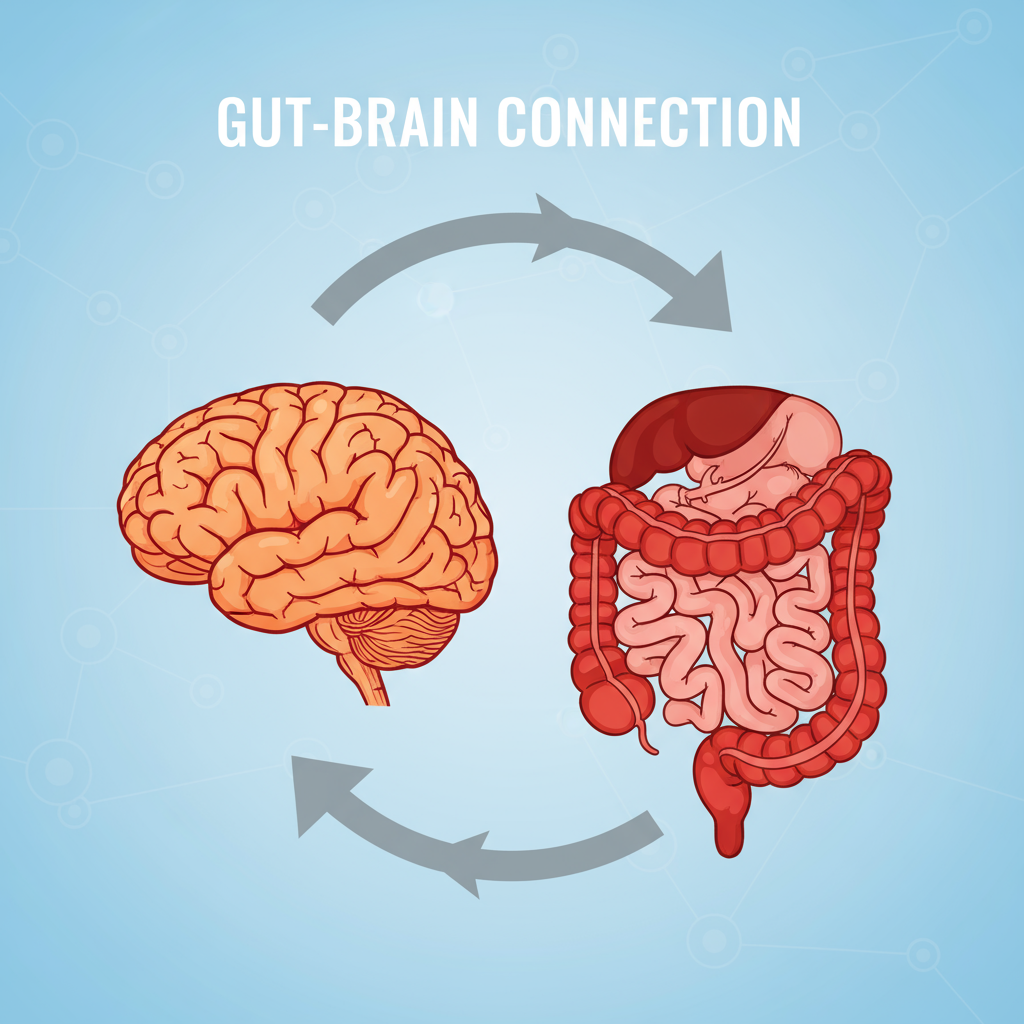
How the gut-brain axis works
Three routes carry most of the traffic. The vagus nerve runs from the brainstem to the gut and carries signals both ways, and most of its fibers carry information up to the brain rather than down. The immune system is the second route, since a large share of the body’s immune tissue lines the gut and inflammatory signals from there reach the brain. The third is chemical: gut bacteria ferment fiber into short-chain fatty acids and make or modify compounds that affect nerves and immune cells.
Stress hormones travel the other way. That is why a job interview can send someone to the bathroom.
The serotonin myth
You will read that the gut makes about 90 percent of the body’s serotonin. That figure is roughly right. The conclusion people draw from it is not. A 2020 review in the Turkish Journal of Gastroenterology put it bluntly: gut serotonin cannot reach the brain because it does not cross the blood-brain barrier. In the gut it controls movement and secretion, and in the blood it is taken up by platelets.
So the gut influences mood, but through nerve, immune and bacterial signals, not by shipping serotonin north. A page that sells you a supplement by pointing at the 90 percent figure is telling you it did not check.
What the research on gut health and mood shows
Anxiety and gut disorders predict each other
The clearest human evidence for a two-way link comes from Koloski and colleagues in the journal Gut in 2012. They surveyed 1,775 adults in 1997 and followed up 1,002 of them 12 years later. Among people with no gut disorder at the start, higher anxiety predicted new functional gut disorders, and both anxiety and depression predicted new IBS. Among people with no psychological symptoms at the start, having a gut disorder predicted higher anxiety and depression later.
Both directions, in the same group of people. That is harder to explain away than a one-off snapshot.
Gut bacteria differ in depression
In 2019 a Belgian team analyzed stool from 1,054 people in the Flemish Gut Flora Project and found two bacterial groups, Coprococcus and Dialister, consistently lower in people with depression, even after accounting for antidepressant use. The finding held in a Dutch group of 1,063 people. The authors were careful to say it came from computer analysis of bacterial DNA and still needs to be confirmed experimentally. It shows an association, not that the missing bacteria cause depression.
Changing diet improved depression in one trial
The SMILES trial, published in BMC Medicine in 2017, randomized 67 adults with major depression to seven sessions with a clinical dietitian or to a social support program of the same length. After 12 weeks, 32.3 percent of the diet group were in remission compared with 8.0 percent of the social support group. The diet was a modified Mediterranean pattern: vegetables, fruit, whole grains, legumes, fish, olive oil and nuts, with less processed food.
Sixty-seven people is a small trial, and diet changes much more than gut bacteria. Still, of everything in this area, a better diet has the strongest human data and the fewest downsides.
Probiotics: promising, not proven
A 2024 meta-analysis in Nutrition Reviews pooled randomized trials of probiotics and prebiotics in people with diagnosed depression or anxiety. Probiotics reduced depression and anxiety scores, while prebiotics showed no clear benefit for depression. The authors rated the certainty of evidence as low for depression and moderate for anxiety, found signs of publication bias and noted that results varied widely between trials.
Our position: a probiotic is a reasonable add-on to try alongside proper treatment, not a replacement for it. If you want the broader picture, our post on the health benefits of probiotic supplements goes through what they can and cannot do.
Signs your gut and mood may be linked
- Bloating, cramping or bowel changes that get worse during stressful weeks
- Anxiety or low mood that started around the same time as a gut problem, a course of antibiotics or a bout of food poisoning
- A diagnosis of IBS, especially alongside anxiety
- Symptoms that ease when you eat more regularly and more plants
None of these prove a gut cause. Depression and anxiety deserve their own assessment, and our article on whether a naturopathic doctor can help with anxiety and depression explains how that fits with care from your regular doctor.
What actually helps
Start with the things that have human evidence:
- Eat more fiber from different plants. Fiber is what gut bacteria turn into short-chain fatty acids.
- Use a Mediterranean-style pattern like the SMILES diet rather than a restrictive one.
- Treat anxiety directly. The Koloski data suggest anxiety can come first.
- Get persistent gut symptoms checked. Conditions like SIBO or celiac disease have specific tests and treatments.
- Try a probiotic for a set period, such as eight weeks, and stop if nothing changes.
What we would skip: expensive stool tests that promise a mood diagnosis from your microbiome. No validated test does that yet. Whether one ever will is a fair question. The bacterial differences seen in depression are averages across large groups, and it is not clear they can say much about one person.
For more on how the microbiome affects other systems, see the gut microbiome and whole-body health and what the evidence says about leaky gut.
Frequently asked questions
What is the gut-brain connection?
The gut-brain connection is the two-way communication between the digestive system and the brain. It runs through the vagus nerve, immune signals and chemicals made by gut bacteria, such as short-chain fatty acids. It explains why stress can upset digestion and why long-term gut problems are linked to higher rates of anxiety and depression.
Can gut problems cause anxiety?
They can contribute. A 12-year study of 1,002 adults published in Gut found that people with functional gut disorders at the start had higher anxiety and depression later, and that anxious people were more likely to develop new gut disorders. The link runs in both directions, so treating both the gut and the anxiety usually works better than treating one.
Is 90 percent of serotonin made in the gut?
About 90 percent of the body’s serotonin is made in the gut, but it does not cross the blood-brain barrier. Gut serotonin controls digestion and is carried in the blood by platelets. The serotonin that affects mood is made inside the brain, so the gut’s influence on mood works through other routes.
Do probiotics help depression?
A 2024 meta-analysis in Nutrition Reviews found probiotics reduced depression and anxiety symptoms in people with a diagnosis, but rated the evidence for depression as low certainty because trials were small, varied and showed signs of publication bias. Probiotics are a reasonable add-on to try, not a substitute for proven treatment.
What is the best diet for the gut-brain axis?
The best-tested option is a Mediterranean-style diet. In the SMILES trial, adults with major depression who improved their diet with a dietitian had a 32.3 percent remission rate after 12 weeks, compared with 8.0 percent in a social support group. The diet emphasized vegetables, fruit, whole grains, legumes, fish, olive oil and nuts.
If your digestion and your mood seem to move together, Dr. Drew Collins, ND, can look at both in one visit, alongside the labs your other doctors already have. Learn more about our brain health care in Bend.
Sources
- Koloski NA, et al. The brain-gut pathway in functional gastrointestinal disorders is bidirectional: a 12-year prospective population-based study. Gut, 2012.
- Valles-Colomer M, et al. The neuroactive potential of the human gut microbiota in quality of life and depression. Nature Microbiology, 2019 (Neuroscience News summary).
- Jacka FN, et al. A randomised controlled trial of dietary improvement for adults with major depression (the SMILES trial). BMC Medicine, 2017.
- Asad A, et al. Effects of prebiotics and probiotics on symptoms of depression and anxiety in clinically diagnosed samples: systematic review and meta-analysis. Nutrition Reviews, 2024.
- Does serotonin in the intestines make you happy? Turkish Journal of Gastroenterology, 2020.
This article is for education and is not a diagnosis. If you are struggling with your mood, talk with a licensed clinician. If you are in crisis in the US, call or text 988.
Want to talk this through for your own health? Book a visit with Dr. Drew Collins, ND at 601 NW Harmon Blvd in Bend, or call (858) 333-5196.