
Echinacea tea is a caffeine-free herbal tea made from the purple coneflower, a daisy-family plant native to North America. People mostly drink it when a cold is starting. The honest summary of the research: echinacea may slightly lower your odds of catching a cold, the evidence that it shortens one is weak, and a cup of tea is a much lighter dose than the extracts used in most studies. It is still a reasonable, pleasant tea for most adults. This guide covers what it is good for, which part of the plant to use, how to make it and who should skip it.
What is echinacea tea?
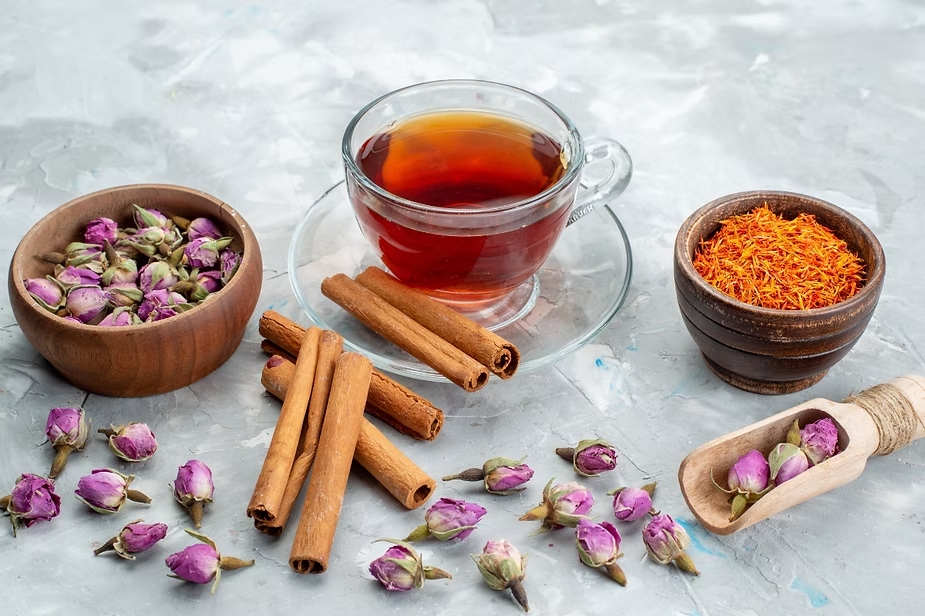
Echinacea tea is an infusion of dried echinacea root, flowers, leaves or a mix of all three. Three species show up in herbal products: Echinacea purpurea, Echinacea angustifolia and Echinacea pallida. E. purpurea is the purple coneflower many people in Central Oregon grow in their gardens.
The taste is earthy and a little grassy. Root-heavy blends often leave a tingling, slightly numb feeling on the tongue. That tingle comes from alkamides, one of the plant’s main active compound groups, so a tea that tingles is usually a tea with some root in it.
What is echinacea tea good for?
Echinacea’s main use, historically and today, is colds and other upper respiratory infections. According to NCCIH, Native Americans used E. purpurea for respiratory infections, tooth pain and snakebite long before it became a supplement. Here is what the research actually supports.
1. Colds: a small preventive effect, maybe
The National Center for Complementary and Integrative Health (NCCIH) says taking echinacea “may slightly reduce your chances of catching a cold,” while its effect on shortening a cold is still unclear.
The biggest review so far, a 2014 Cochrane analysis of 24 randomized trials with 4,631 participants, found that no single prevention trial showed a statistically significant result. Pooled together, though, the prevention trials pointed toward a 10 to 20% lower risk of getting sick. For treating a cold that has already started, only two of six trials showed that echinacea shortened it. The authors called any benefit weak.
You will see bigger numbers online. A 2007 meta-analysis in The Lancet Infectious Diseases reported 58% lower odds of developing a cold and colds that ended 1.4 days sooner. That analysis pooled 14 studies of mixed quality, and the later Cochrane work did not reproduce effects that large. We think the smaller figure is the fairer one to plan around.
One more caveat. Most of these trials tested concentrated extracts, pressed juice or tablets. Very few tested tea, so nobody knows exactly how much of the effect a cup of tea delivers.
2. Sore throat and congestion comfort
A hot cup of any herbal tea helps a scratchy throat and loosens congestion, partly just from the steam and warm fluid. Echinacea tea works well here, especially blended with ginger, mint or honey. That is a comfort benefit, not proof that echinacea clears congestion faster than plain tea would. Still, hot, caffeine-free and easy to sip in bed counts for something when you are sick.
3. Antioxidant plant compounds
Echinacea contains phenolic compounds such as cichoric acid, along with flavonoids and alkamides. Those compounds show antioxidant and anti-inflammatory activity in lab studies. Whether drinking the tea changes inflammation in your body in any measurable way has not been shown in good human trials, so treat this as a nice extra rather than a reason to drink it.
4. Skin and wound healing
Wound healing is one of echinacea’s traditional uses. Research on topical echinacea is limited, and there is no good evidence that drinking the tea improves acne, eczema or wound healing. If you have a skin condition that is not improving, see a clinician rather than relying on tea.
What about lemon echinacea tea?
Lemon echinacea blends are easy to find on grocery store shelves. The lemon (often lemongrass or lemon peel) mostly improves the flavor and covers echinacea’s earthy edge. It does not add a meaningful dose of vitamin C. The benefits of lemon echinacea tea are essentially the benefits of echinacea tea, in a version people are more likely to finish.
What part of echinacea is used for tea?
You can make tea from the root, the aerial parts (flowers, leaves and stems) or a blend. Memorial Sloan Kettering Cancer Center’s herb database lists extracts of both the root and the aerial parts as the forms commonly used in herbal preparations.
- Root: the strongest-tasting part and the source of that tongue tingle. Roots are tough, so they need simmering rather than a quick steep.
- Flowers and leaves: milder and more floral. They steep like ordinary herbal tea.
- Whole-plant blends: common in commercial teas. A blend of root and aerial parts is a sensible middle ground.
If you grow your own, most herb growers cut flowers and leaves in summer when the blooms first open and dig roots in fall from well-established plants. The USDA’s plant guide for purple coneflower puts a number on “established”: roots take three to four years to reach harvestable size, and they are dug once the plant goes dormant and the leaves start turning brown (USDA NRCS Plant Guide). A first-year plant from the garden center won’t give you much root worth drying. Only harvest plants you can identify with certainty and that have not been sprayed.
How to make echinacea tea
With dried flowers and leaves (or a tea bag)
- Bring about 1 cup (8 oz) of water just to a boil.
- Add 1 to 2 teaspoons of dried echinacea flowers and leaves, or one tea bag.
- Cover the cup and steep for 10 to 15 minutes. Covering keeps the aromatic compounds in the cup.
- Strain, then add honey, lemon or fresh ginger if you like.
With dried root (a decoction)
- Add 1 to 2 teaspoons of dried, chopped echinacea root to about 1.5 cups of water in a small pot.
- Bring to a boil, lower the heat and simmer, covered, for 15 to 20 minutes.
- Take it off the heat, add a teaspoon of dried flowers if you have them and let it sit 5 more minutes.
- Strain and drink warm.
How to make echinacea tea from the plant (fresh)
Fresh material is mostly water, so use roughly two to three times as much by volume as you would dried. A small handful of fresh petals and leaves per cup, steeped covered for 10 to 15 minutes, is a good starting point. Rinse fresh roots well, chop them finely and simmer as above.
How much and how often
Many people drink 2 to 3 cups a day for a few days when cold symptoms start, then stop. There is no established dose for echinacea tea, and NCCIH describes it as likely safe for most adults for short periods, so short courses make more sense than drinking it every day all year. If you want a daily herbal tea, pick something else for the long haul and save echinacea for when you need it.
Echinacea tea side effects
Most people drink echinacea tea without trouble. According to NCCIH, the most common side effects are digestive: stomach pain, nausea or general stomach upset. MSKCC also lists headache, dizziness, constipation and rash.
- Allergic reactions. Echinacea is in the daisy family. People allergic to ragweed, chrysanthemums, marigolds or daisies are more likely to react, and NCCIH notes some reactions can be severe. Stop and get medical help for hives, swelling or trouble breathing. People with asthma or other allergic conditions should be especially careful.
- Rash in children. In clinical trials, some children taking echinacea developed rashes that may have been allergic. See our guide on whether toddlers can have echinacea tea before giving it to a young child.
- Rare serious reactions. MSKCC’s database records rare case reports of low platelet counts, liver problems and anaphylaxis. These are uncommon, but they are one reason we do not recommend open-ended daily use.
Drug interactions
NCCIH says the evidence is conflicting on whether echinacea interacts with drugs processed by the liver. MSKCC is more specific: echinacea can inhibit the liver enzymes CYP3A4 and CYP2C8, may reduce the effect of immunosuppressants such as tacrolimus and cyclosporine and has been linked to severe low platelet counts when combined with the chemotherapy drug etoposide.
Talk with your prescriber or pharmacist before drinking echinacea tea regularly if you take:
- Immunosuppressants, including transplant medications
- Chemotherapy or tamoxifen
- Any medication with a narrow safety margin that is processed through CYP3A4
Who should avoid echinacea tea?
- Anyone allergic to daisy-family plants.
- People taking immunosuppressant medications or undergoing chemotherapy, unless their oncology or transplant team approves it.
- People with autoimmune conditions such as lupus, rheumatoid arthritis or multiple sclerosis. Echinacea is used to stimulate immune activity, and that is the wrong direction for an immune system that is already overactive. The research here is limited, so a cautious approach is to skip it unless your doctor says otherwise.
- People who are pregnant or breastfeeding, unless cleared by their clinician. NCCIH says some research suggests it is possibly safe for up to 7 days in the first trimester, and little is known about breastfeeding. We cover this in more detail in can you drink echinacea tea while pregnant.
- Young children, unless a pediatric clinician has okayed it.
Wondering about blood pressure? We looked at that question separately in does echinacea raise blood pressure.
Frequently asked questions
What are the main benefits of echinacea tea?
Its best-supported use is a possible small reduction in the chance of catching a cold. It is also a warm, caffeine-free drink that soothes a sore throat. Claims that it treats infections, anxiety or skin conditions go beyond what the evidence shows.
Does echinacea tea work for colds and flu?
For colds, it may help a little with prevention, and the evidence for shortening a cold is weak (Cochrane, 2014). For flu, the evidence is too limited to rely on. If you are at high risk for flu complications, get vaccinated and talk to your doctor about antiviral medication rather than counting on tea.
What part of echinacea is used for tea?
The root, the flowers and leaves, or a blend. Root gives a stronger, tingly tea and needs simmering. Flowers and leaves steep like regular herbal tea.
How do you make echinacea tea?
Steep 1 to 2 teaspoons of dried flowers and leaves in 1 cup of just-boiled water, covered, for 10 to 15 minutes. For dried root, simmer it for 15 to 20 minutes instead.
Can I drink echinacea tea every day?
Short courses of a week or two when you feel a cold coming on are the better fit. Long-term daily safety has not been well studied.
When is the best time to drink echinacea tea?
At the first sign of cold symptoms. If it upsets your stomach, drink it with food.
Is echinacea tea safe for kids?
Children in trials had more rashes, possibly allergic. Check with a pediatric clinician first, and never give it to a child with daisy-family allergies.
Is echinacea an antibiotic?
No. It does not treat bacterial infections, and it is not a substitute for antibiotics when you actually need them. See a clinician for a fever over a few days, ear pain, shortness of breath or a sore throat with white patches.
Getting help with herbs in Bend
Tea is the easy part. The harder questions are whether an herb makes sense with your medications and health history, and what dose actually matters. Dr. Drew Collins, ND, uses herbal medicine alongside conventional care at Proactive Choice, and our immune enhancement care is a better fit if you are getting sick over and over. For a broader list of options, read our guide to herbal remedies for the immune system.
Proactive Choice is at 601 NW Harmon Blvd #10, Bend, OR 97703, and sees patients from Redmond, Sisters, La Pine and Sunriver. Call (858) 333-5196 or book a consultation online.
This article is general education, not medical advice. Talk with your own clinician before starting any herb, especially if you take prescription medication, are pregnant or have a chronic condition.
Want to talk this through for your own health? Book a visit with Dr. Drew Collins, ND at 601 NW Harmon Blvd in Bend, or call (858) 333-5196.