
A scratchy throat hits differently when you are pregnant. The instinct to reach for something natural, like a warm cup of echinacea tea, is a reasonable one. But pregnancy changes the calculus on nearly every supplement and herb, and echinacea is no exception. Here is what the actual research says, not just what a supplement label implies.
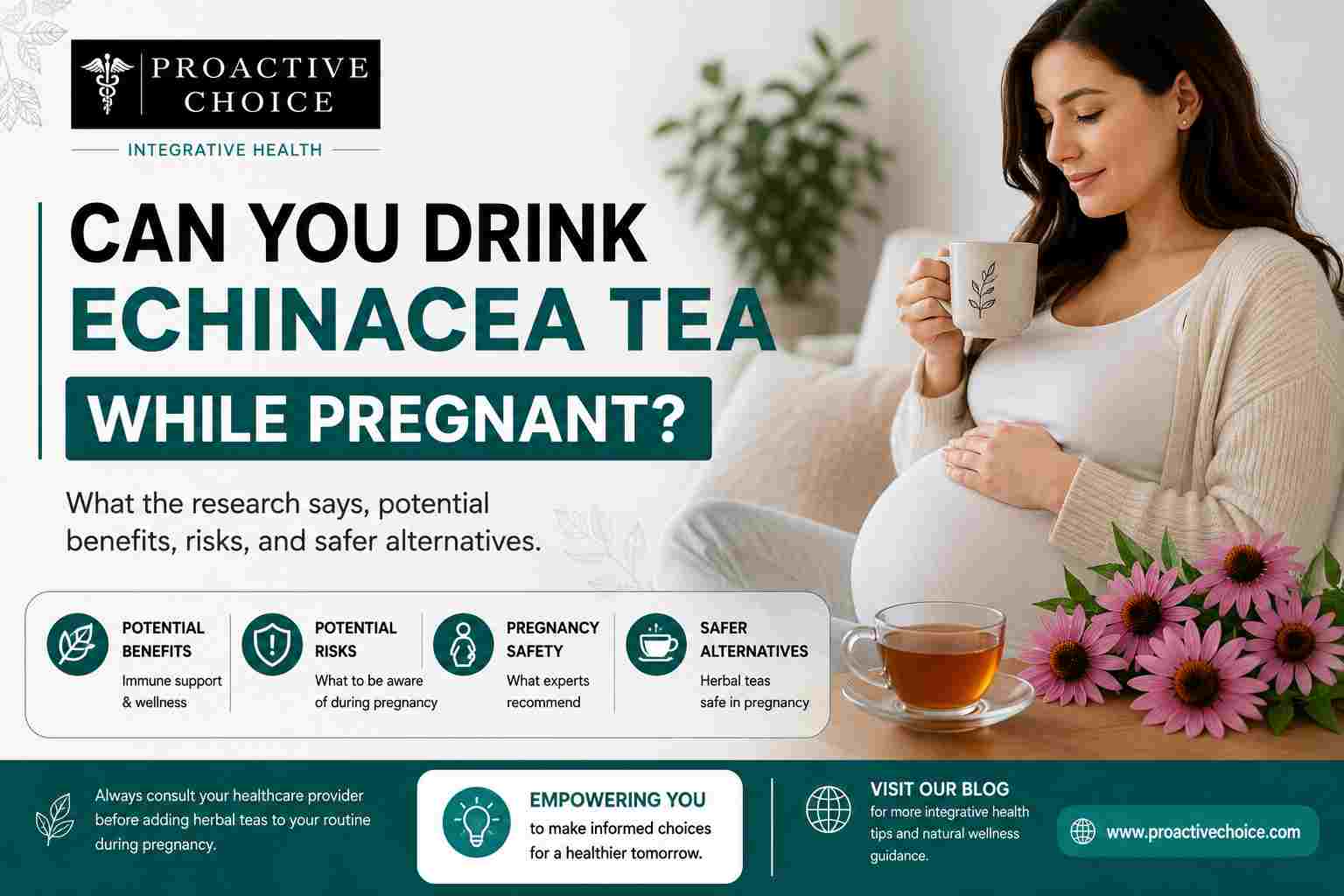
Quick Answer: Most available evidence, including a large prospective cohort study, has not found an increased risk of major birth defects, preterm delivery, or low birth weight linked to echinacea use in pregnancy. Some references classify short-term oral use as “possibly safe,” particularly in the first trimester. That said, evidence is still limited, quality varies widely between products, and every source recommends checking with your OB, midwife, or naturopathic provider before adding it to your routine.
What Is Echinacea Tea?
Echinacea tea is brewed from the root, leaf, or flower of the echinacea plant, most often Echinacea purpurea, Echinacea angustifolia, or Echinacea pallida. It has a long history of traditional use for immune support, and today it is one of the most popular herbal teas reached for at the first sign of a cold. We cover the full benefit and safety picture in our complete guide to echinacea tea, but pregnancy deserves its own closer look, since the usual “generally safe” advice does not automatically apply.
Is Echinacea Safe During Pregnancy? What the Research Shows
Herbal safety during pregnancy is notoriously under-studied, since pregnant women are almost always excluded from clinical trials. Echinacea is a rare exception with a real, if modest, body of research behind it.
A prospective controlled study from the Motherisk Program in Toronto followed women who contacted the program after using echinacea, most often during the first trimester, and compared outcomes with a matched group who had not been exposed to any known teratogen. The study found no increased risk of major malformations among babies exposed to echinacea in early pregnancy. A separate systematic review of the pregnancy and lactation literature reached a similar conclusion, describing echinacea as non-teratogenic based on the available data, while noting that evidence for lactation safety remains thinner.
A larger dataset compiled by MotherToBaby compared more than 350 echinacea-exposed pregnancies with over 68,000 pregnancies without exposure. It found no increased chance of preterm delivery, low birth weight, or babies born small for gestational age. That is a meaningfully larger sample than most herbal safety data available for pregnancy, which is part of why echinacea is discussed differently than many other herbs in this context.
None of this amounts to a green light without caveats. The National Center for Complementary and Integrative Health (NCCIH) notes that some studies of solid or liquid echinacea extracts suggest it is possibly safe for up to seven days during the first trimester, and explicitly recommends talking with your health care provider before use. Data on later trimesters is thinner, and almost nothing is known about long-term or high-dose use.
By the Numbers
- Over 350 echinacea-exposed pregnancies compared with more than 68,000 unexposed pregnancies showed no increase in preterm delivery, low birth weight, or small-for-gestational-age babies.
- NCCIH classifies short-term oral use of certain echinacea extracts as possibly safe for up to 7 days in the first trimester.
- A Canadian systematic review found good evidence from a prospective cohort study that first-trimester oral echinacea did not raise the risk of major malformations.
- Since at least half of all pregnancies are unplanned, a meaningful share of the safety data comes from women who used echinacea before realizing they were pregnant, which is reassuring context if that describes you.
Pros and Cons of Echinacea Tea During Pregnancy
Potential Upsides
- Caffeine-free, unlike many other comfort beverages
- Some observational safety data specific to pregnancy exists, more than for most herbs
- May offer mild comfort and hydration at the first sign of a cold
Reasons for Caution
- Evidence is strongest for short-term, first-trimester use only
- Product quality and active-compound concentration vary widely by brand
- Some echinacea products have tested positive for heavy metal contamination
- Not appropriate if you have an autoimmune condition or a daisy-family plant allergy
Myth vs. Fact
Myth: “It’s an herbal tea, so it’s automatically gentler and safer than medication during pregnancy.”
Fact: Herbal does not mean risk-free. Echinacea stimulates immune activity, and supplement products are not held to the same manufacturing standards as prescription medication, which is exactly why the research focuses on short, limited-dose use rather than open-ended daily drinking.
Myth: “There’s no research on echinacea and pregnancy, so no one really knows.”
Fact: There is more pregnancy-specific safety data on echinacea than on most herbs, including a comparison of over 68,000 pregnancies. It is limited, but it is not nonexistent.
Myth: “If it’s safe in the first trimester, it’s safe the whole pregnancy.”
Fact: Most of the reassuring data specifically covers first-trimester exposure and short courses of under 7 days. Second and third trimester data, and long-term use at any point, is much thinner.
When to Avoid Echinacea During Pregnancy
A few situations call for skipping echinacea tea altogether, or at minimum getting explicit sign-off from your provider first:
- Allergy to the daisy family. If ragweed, marigolds, or chrysanthemums trigger a reaction for you, echinacea can too.
- Autoimmune conditions such as lupus or rheumatoid arthritis, since echinacea stimulates immune activity that is already overactive in these conditions.
- Medication use, particularly immunosuppressants or anything metabolized heavily by the liver, since echinacea may interact with both.
- Unregulated or low-quality products, given documented cases of heavy metal contamination in some echinacea supplements. High blood lead levels during pregnancy can affect fetal development, so sourcing matters.
- Breastfeeding, where the safety data is considerably thinner than for pregnancy itself.
Safer Ways to Support Immunity During Pregnancy
If you are mainly reaching for echinacea tea to ward off a cold, there is a lot you can do that carries no open safety questions at all:
- Prioritize sleep, which is one of the most consistently supported factors in immune resilience
- Stay ahead of hydration, especially if nausea has made fluids harder to keep down
- Lean on vitamin C and zinc-rich foods like citrus, bell peppers, and pumpkin seeds
- Wash hands frequently and avoid close contact with anyone actively sick
- Ask your provider about a prenatal vitamin that covers your baseline micronutrient needs
If you want a more comprehensive, personalized approach to immune support that accounts for your specific pregnancy, our immune enhancement services and women’s health care at Proactive Choice are built around exactly this kind of individualized guidance.
Already Had a Cup? Here’s What to Know
If you drank echinacea tea before realizing you were pregnant, or before reading this, the available data is genuinely reassuring. The Motherisk cohort and the larger MotherToBaby dataset both specifically capture this scenario, since a meaningful share of the women in these studies used echinacea in early pregnancy before a positive test. Mention it at your next prenatal visit so it is part of your record, but there is no evidence pointing to a reason for alarm from occasional or short-term use.
Talk to Your Provider First
The consistent thread across every credible source, from NCCIH to the peer-reviewed pregnancy and lactation literature, is the same: talk to your provider before adding echinacea to a pregnancy routine, even short-term. Dr. Drew Collins, ND at Proactive Choice in Bend, Oregon works with patients to sort out exactly which herbal and nutritional supports make sense for their specific health picture, including during pregnancy. Schedule a consultation or call (858) 333-5196 if you would like guidance tailored to you.
Frequently Asked Questions
Is echinacea tea safe in the first trimester?
The best available evidence, including a prospective cohort study, has not found an increased risk of major malformations from short-term first-trimester use. NCCIH describes certain extracts as possibly safe for up to 7 days during this period, though you should still check with your provider.
Can echinacea tea cause a miscarriage?
No published research has linked echinacea use to an increased risk of miscarriage. The available cohort data focuses on malformation risk, preterm delivery, and birth weight, and none of these showed an increase with echinacea exposure.
Is it safe to drink echinacea tea in the second or third trimester?
Most of the specific safety research focuses on first-trimester exposure. Data for later pregnancy is more limited, so this is a conversation to have directly with your OB or midwife rather than an assumption to make on your own.
Is echinacea tea safe while breastfeeding?
The evidence here is thinner than for pregnancy. Sources generally advise caution and recommend checking with your provider before using echinacea while breastfeeding.
What should I drink instead if I am unsure about echinacea?
Ginger tea and peppermint tea are commonly considered reasonable options during pregnancy for mild nausea or comfort, though you should still confirm with your provider based on your individual history. Plain hydration with citrus for vitamin C is always a safe baseline.
Related Reading
- How to Use Echinacea for Medicinal Purposes
- Does Echinacea Raise Blood Pressure?
- Can 2-Year-Olds Have Echinacea Tea?
Explore Women’s Health and Immune Support at Proactive Choice in Bend
Navigating what is safe during pregnancy shouldn’t be a guessing game. Dr. Drew Collins, ND and the team at Proactive Choice in Bend, Oregon offer individualized, evidence-informed guidance for women’s health and immune support:
- Women’s Health Bend, OR: Personalized care for hormonal, prenatal-adjacent, and whole-body wellness needs
- Immune Enhancement Therapy: Evidence-based strategies to support natural immune defenses
- Herbal Medicine Bend, OR: Guidance on which herbal remedies fit your specific health picture
Proactive Choice is located in Bend, Oregon and serves patients throughout Central Oregon including Redmond, Sisters, La Pine, and Sunriver. Call (858) 333-5196 or schedule a consultation online.
Want to talk this through for your own health? Book a visit with Dr. Drew Collins, ND at 601 NW Harmon Blvd in Bend, or call (858) 333-5196.