
If you manage blood pressure, you have probably learned to double-check everything you put in your body, supplements included. Echinacea shows up on a lot of “herbs to watch” lists, so it is a fair question: does it actually move the needle on blood pressure, or is that reputation bigger than the evidence?
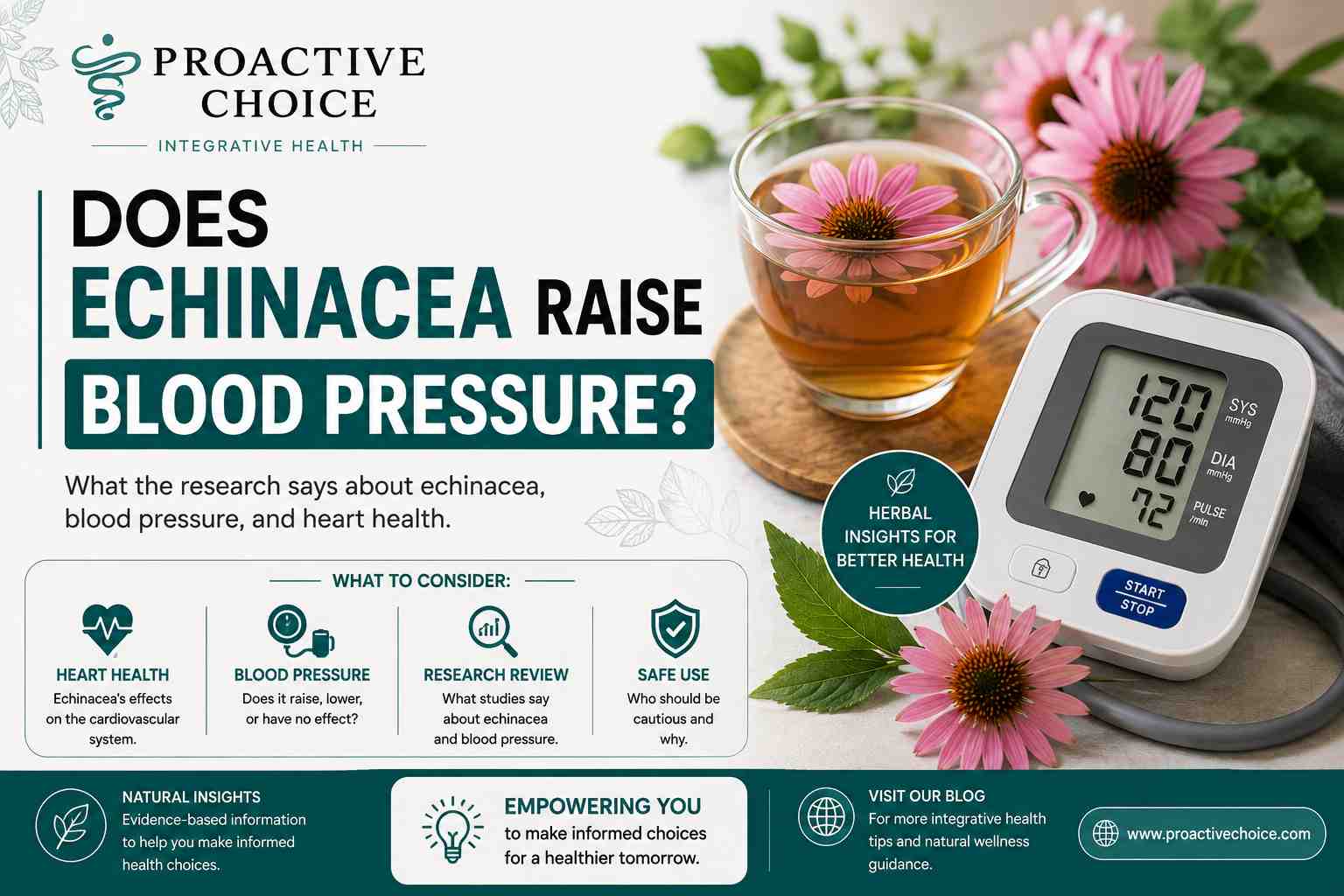
Quick Answer: A controlled clinical study found that a single 350 mg dose of echinacea had no measurable effect on blood pressure or heart rhythm in healthy adults. However, a separate large population-based study observed a slight association between echinacea use and higher diastolic blood pressure. The honest summary: echinacea is not a proven blood pressure raiser, but people with hypertension, heart disease, or blood pressure medication should still talk to a provider before regular use, mainly because of drug-interaction and immune-system concerns rather than a confirmed direct effect on blood pressure itself.
What the Direct Clinical Research Shows
The most direct evidence comes from a randomized, placebo-controlled crossover study published in the American Journal of Health-System Pharmacy. Healthy volunteers received either a single 350 mg dose of Echinacea purpurea or a placebo, with electrocardiograms and blood pressure readings taken before dosing and at one, three, five, and eight hours afterward. The result: no significant difference in systolic or diastolic blood pressure, and no meaningful change in ECG measurements, between the echinacea and placebo groups. One participant did report shortness of breath and mild flu-like symptoms hours after dosing, which resolved on its own.
This is the kind of controlled, mechanistic evidence that speaks most directly to the question “does echinacea raise blood pressure,” and the answer from this study is no, at least for a single standard dose in otherwise healthy adults.
What the Population-Level Data Shows
Complicating the picture, Memorial Sloan Kettering Cancer Center’s integrative medicine database notes that a large population-based study observed echinacea use associated with a slight increase in diastolic blood pressure. This is observational data, not a controlled trial, which matters: it can show a statistical association without proving echinacea caused the change. People who reach for herbal immune support may also differ from non-users in other health habits that independently affect blood pressure, so the association does not settle the question of direct cause and effect the way the crossover trial does.
Taken together, the current evidence base is genuinely mixed: a well-designed controlled study found no acute effect, while a larger observational dataset flagged a modest association worth further study.
By the Numbers
- A single 350 mg dose of E. purpurea showed no significant change in systolic or diastolic blood pressure across an 8-hour monitoring window in a placebo-controlled crossover trial.
- Blood pressure and ECG readings were taken at 4 separate time points post-dose (1, 3, 5, and 8 hours) to catch any delayed effect. None was found.
- A large population-based study found a slight association between echinacea use and higher diastolic blood pressure, an observational finding rather than proof of direct cause.
- Adverse events across pooled echinacea safety reports are dominated by gastrointestinal upset and rash, not cardiovascular symptoms.
Why Echinacea and Blood Pressure Get Linked at All
Part of the confusion traces back to echinacea’s core mechanism: it is an immune stimulant, not a stimulant in the caffeine or pseudoephedrine sense. Its alkamide compounds interact with cannabinoid receptors and influence inflammatory cytokines like TNF-alpha and interleukin-6. There is a well-documented, separate scientific link between chronic inflammation and hypertension, since inflammatory and immune pathways play a real role in blood pressure regulation over time. That broader immune-hypertension connection is likely why researchers have looked at echinacea specifically, even though echinacea itself has not been shown to directly raise blood pressure in controlled testing.
It is also worth separating echinacea from decongestant cold medications like pseudoephedrine, which reliably do raise blood pressure and are the actual culprit behind most “this cold medicine spiked my blood pressure” experiences. If you have had that reaction to a cold remedy before, it was very likely the decongestant, not an echinacea component, and that distinction matters when choosing what to reach for during cold season.
Comparing Common Cold-Season Herbs and Blood Pressure
| Herb or Ingredient | Blood Pressure Concern | Level of Evidence |
|---|---|---|
| Echinacea | No confirmed direct effect; one observational association with diastolic pressure | Mixed, mostly reassuring |
| Licorice root | Can meaningfully raise blood pressure with regular use | Well established |
| Ginseng | May raise or lower blood pressure depending on type and dose | Preliminary, inconsistent |
| Pseudoephedrine (decongestant) | Reliably raises blood pressure and heart rate | Well established |
Pros and Cons for People Managing Blood Pressure
Reasons It May Be Fine
- Controlled trial data found no acute blood pressure effect from a standard dose
- Short courses of 7 to 10 days limit cumulative exposure
- Caffeine-free, so it will not stack with stimulant-related BP spikes
Reasons to Be Cautious
- Observational data flags a possible association with diastolic pressure
- May interact with medications metabolized by the liver, which can include some blood pressure drugs
- Not well studied for long-term or daily use, which is more relevant to a chronic hypertension routine
- Immune-stimulating action is not appropriate alongside every cardiovascular or autoimmune condition
Myth vs. Fact
Myth: “Echinacea is basically an herbal stimulant, so of course it raises blood pressure.”
Fact: Echinacea does not work like caffeine or a decongestant. It modulates immune activity rather than the sympathetic nervous system, and the one controlled trial measuring this directly found no blood pressure change.
Myth: “If a study found an association, echinacea must be causing higher blood pressure.”
Fact: Association is not causation. The population study noting a link between echinacea use and diastolic pressure was observational, meaning other lifestyle or health factors among echinacea users could explain part or all of the pattern.
Myth: “People with high blood pressure should never touch echinacea.”
Fact: The evidence does not support a blanket ban. The more consistent concern is drug interactions and underlying conditions like autoimmune disease, which is why a quick conversation with your provider is the recommended step, not automatic avoidance.
Who Should Talk to a Provider Before Using Echinacea
- Anyone currently taking blood pressure medication, since echinacea may affect how certain drugs metabolized by the liver are processed
- Anyone with an autoimmune condition, since echinacea’s immune-stimulating action can be counterproductive
- Anyone taking immunosuppressant medication
- Anyone with a known allergy to ragweed, marigolds, or chrysanthemums
- Anyone planning to use echinacea for more than 10 to 14 days at a stretch
If cardiovascular health and inflammation are part of your bigger picture, our immune enhancement services and herbal medicine consultations at Proactive Choice are built to look at how a supplement like echinacea fits into your full health profile, not just in isolation.
The Bottom Line
For most healthy adults using echinacea short-term at standard doses, the direct evidence does not support a meaningful blood pressure effect. If you manage hypertension, take blood pressure medication, or have a cardiovascular or autoimmune condition, the smarter move is a quick check-in with your provider before starting, not because echinacea is a proven blood pressure risk, but because your overall medication and condition picture deserves a second set of eyes. Dr. Drew Collins, ND at Proactive Choice in Bend can help you sort through exactly that. Schedule a consultation or call (858) 333-5196.
Frequently Asked Questions
Can echinacea cause a blood pressure spike?
No controlled study has shown echinacea causing an acute blood pressure spike. A placebo-controlled trial using a standard 350 mg dose found no change in systolic or diastolic pressure over 8 hours of monitoring.
Is echinacea safe if I take blood pressure medication?
Possibly, but check with your provider first. The concern is less about a direct blood pressure effect and more about echinacea potentially interacting with how certain medications are metabolized by the liver.
Why do some sources say echinacea affects blood pressure and others say it does not?
The evidence is genuinely mixed. A controlled clinical trial found no effect, while a separate large observational study noted a slight association with diastolic pressure. Both findings are accurate reports of different types of evidence, which is why the honest answer is nuanced rather than a flat yes or no.
Is it the echinacea or the cold medicine raising my blood pressure?
If you have noticed a blood pressure change while sick, decongestants like pseudoephedrine are a far more likely and well-documented cause than echinacea itself.
How long can I safely take echinacea if I have high blood pressure?
Most safety guidance recommends short courses of 7 to 14 days rather than continuous daily use, regardless of blood pressure status. Talk to your provider about what fits your specific situation.
Related Reading
- How to Use Echinacea for Medicinal Purposes
- Can You Drink Echinacea Tea While Pregnant?
- Can 2-Year-Olds Have Echinacea Tea?
Explore Integrative Health Services at Proactive Choice in Bend
Interested in supporting cardiovascular health and immunity with a personalized, evidence-based approach? Proactive Choice in Bend, Oregon offers integrative therapies under the care of Dr. Drew Collins, ND:
- Immune Enhancement Therapy: Evidence-based strategies to support natural immune defenses
- Herbal Medicine Bend, OR: Guidance on which herbal remedies fit your specific health picture
- IV Therapy Bend, OR: Nutrient infusions including Vitamin C, glutathione, and immune support blends
Proactive Choice is located in Bend, Oregon and serves patients throughout Central Oregon including Redmond, Sisters, La Pine, and Sunriver. Call (858) 333-5196 or schedule a consultation online.
Further reading
- Echinacea, Memorial Sloan Kettering Cancer Center (About Herbs). Side effects, drug interactions, and a study noting a slight rise in diastolic blood pressure.
- Echinacea: Usefulness and Safety, NCCIH (NIH). What research shows about echinacea, its common side effects, and possible drug interactions.
- Medications and supplements that can raise your blood pressure, Mayo Clinic. Medicines and herbal supplements known to raise blood pressure or interfere with blood pressure drugs.
Want to talk this through for your own health? Book a visit with Dr. Drew Collins, ND at 601 NW Harmon Blvd in Bend, or call (858) 333-5196.