
When a toddler comes down with yet another cold, it is natural to look for something gentle and natural to help. Echinacea tea often comes up in that search. Before offering a cup to a 2-year-old, though, it is worth knowing what pediatric research and drug safety regulators actually say, because the honest answer for this age group is more cautious than the marketing around echinacea tea usually suggests.
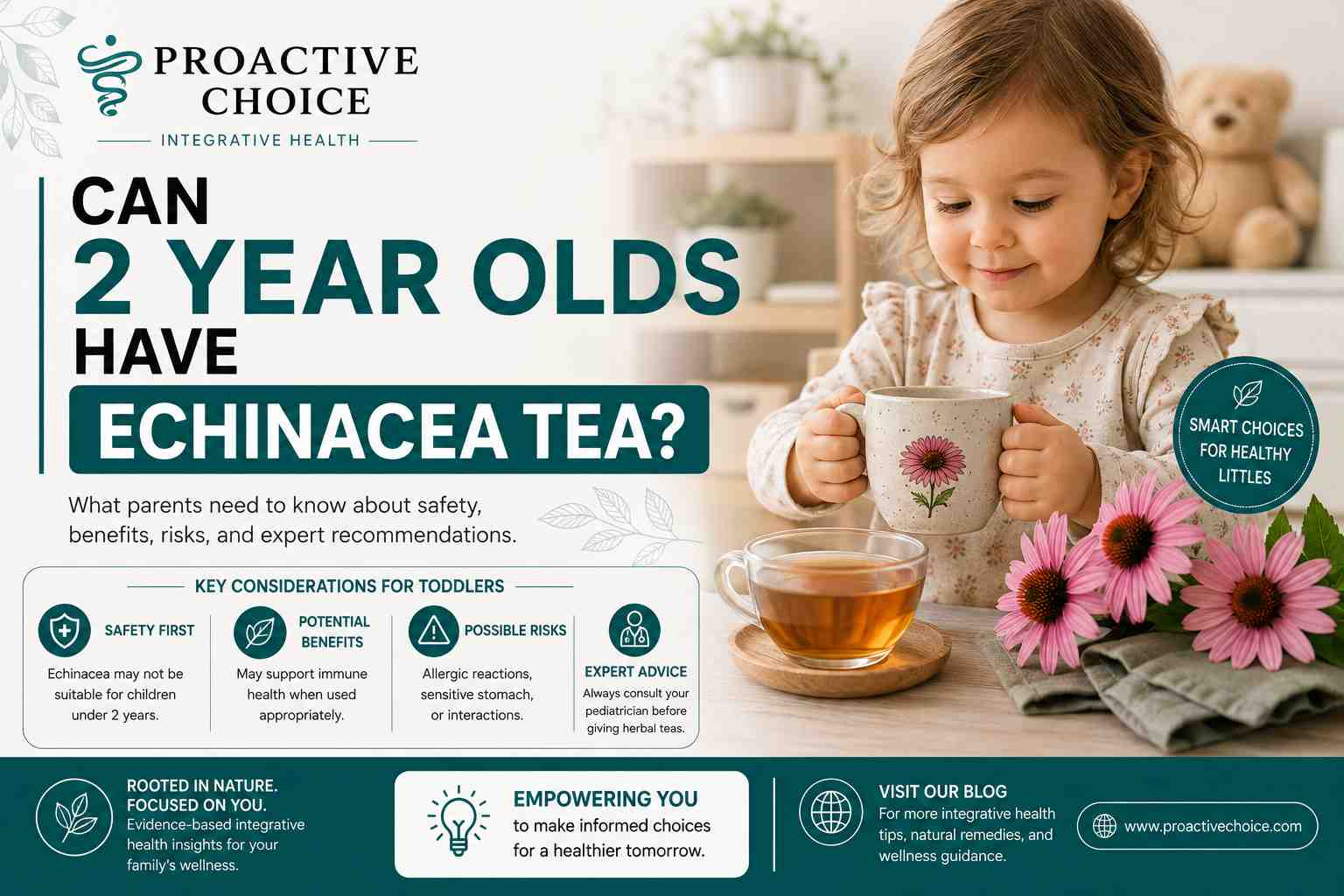
Quick Answer: Most pediatric and regulatory guidance advises against giving oral echinacea products, including tea, to children under 12, and toddlers specifically carry the clearest caution. The UK’s medicines regulator issued a formal warning against echinacea in children under 12 due to allergic reaction risk. A large randomized trial in children ages 2 to 11 found echinacea provided no meaningful benefit for cold symptoms and was linked to more skin rashes than placebo. For a 2-year-old, the safest path is to skip echinacea tea and talk to your child’s pediatrician about age-appropriate options instead.
What the Research in Young Children Actually Found
The most relevant study here is a randomized clinical trial published in the Journal of the American Medical Association, led by researchers at the University of Washington’s Child Health Institute, involving 407 children ages 2 to 11 with cold symptoms. Children received either echinacea extract or a placebo. The results were clear on two fronts: echinacea worked no better than placebo at reducing sneezing, runny nose, or fever, and symptoms lasted about the same number of days in both groups. On safety, mild skin rashes occurred in roughly 7 percent of colds treated with echinacea, compared with about 2.7 percent in the placebo group.
That combination, no measurable benefit plus a higher rash rate, is the central reason most pediatric sources now recommend caution rather than routine use in this age group. A separate study of children ages 2 through 11 reached a similar conclusion: echinacea did not help treat upper respiratory infection symptoms and was associated with a higher chance of rash.
Why Regulators Specifically Warn About Children Under 12
The UK’s Medicines and Healthcare products Regulatory Agency (MHRA), acting on advice from European and UK herbal medicines committees, issued a specific warning that oral echinacea products should not be given to children younger than 12 due to the risk of allergic reactions. The agency was direct about the nature of the risk: reactions can include skin rash, hives, swelling of the mouth or tongue, and in rare cases, severe reactions like anaphylaxis. Officials described the risk as low in absolute terms but severe enough in the reactions that have occurred that the perceived benefits did not outweigh the potential risks for this age group.
The National Center for Complementary and Integrative Health (NCCIH) takes a similarly cautious stance, noting that while one study suggested echinacea might reduce the chance of respiratory infections and complications in children, the overall evidence is not strong enough to draw a clear conclusion, and parents should talk with a child’s health care provider before giving any echinacea product.
By the Numbers
- A randomized trial of 407 children ages 2 to 11 found echinacea no more effective than placebo for cold symptoms.
- Skin rashes occurred in about 7% of colds treated with echinacea, compared with 2.7% with placebo, in that same trial.
- The MHRA’s warning against oral echinacea specifically covers children younger than 12, based on advice from European and UK herbal medicines committees.
- Cold symptoms in that trial lasted an average of about 9 days in both the echinacea and placebo groups, essentially no difference.
Pros and Cons of Echinacea Tea for a 2-Year-Old
Potential Upsides
- Caffeine-free, warm liquid can offer general comfort during illness
- Mild dehydration prevention from any warm fluid intake
Reasons to Avoid
- No proven symptom or duration benefit in the largest pediatric trial available
- Higher rash rate observed compared with placebo in that same trial
- Formal regulatory warning against oral use under age 12
- Increased allergy risk in children sensitive to ragweed, marigolds, or chrysanthemums
- No established minimum safe dose specifically for toddlers
Myth vs. Fact
Myth: “It’s just an herbal tea, so it’s automatically gentler than giving a toddler medicine.”
Fact: The largest pediatric trial found echinacea caused more rashes than a placebo in children ages 2 to 11, with no offsetting benefit. Natural does not automatically mean lower risk for this age group.
Myth: “If it helps adults with colds, it should help toddlers too.”
Fact: The evidence does not transfer cleanly by age. The best available pediatric-specific trial found no benefit for cold symptoms in children ages 2 to 11, a different result than some adult studies suggest.
Myth: “A small cup of weak tea is too little to cause a reaction.”
Fact: Allergic reactions to echinacea are not strictly dose-dependent. Even modest exposure can trigger a reaction in a sensitive child, which is part of why regulators frame this as a categorical caution for the age group rather than a dosing question.
Safer Ways to Support a Sick Toddler
If your 2-year-old has a cold, these approaches carry a much stronger safety track record for this age group:
- Offer plenty of fluids, water, diluted juice, or broth, to prevent dehydration
- Use a cool-mist humidifier in their room, especially overnight
- Saline nasal drops and gentle suction can ease congestion in young children
- Extra rest and comfort, following their lead on appetite and activity level
- Call your pediatrician for fever in a child under 2, symptoms lasting more than a week, or any sign of difficulty breathing
If you are interested in a broader, professionally guided approach to your family’s immune health and which supplements genuinely make sense at different ages, our immune enhancement services and herbal medicine consultations at Proactive Choice can help you build a plan grounded in evidence rather than guesswork. For your toddler specifically, their pediatrician remains the right first call.
When to Call the Pediatrician
Reach out to your child’s pediatrician before trying any herbal remedy, including echinacea tea, and always for a fever in a baby under 3 months, a high or persistent fever in an older toddler, labored breathing, unusual lethargy, signs of dehydration, or a cold that is not improving after a week or so. A pediatrician can also tell you whether your specific child, based on allergy history and health background, has any additional reason for caution.
Frequently Asked Questions
Is echinacea tea safe for a 2-year-old with a cold?
Most pediatric and regulatory guidance advises against oral echinacea for children under 12, including 2-year-olds. The largest relevant trial found no symptom benefit and a higher rash rate compared with placebo.
What age is echinacea considered safe for children?
Guidance varies, but many regulators and pediatric sources point to age 12 as the threshold for oral echinacea products, based on allergic reaction risk data specific to younger children.
My toddler already had echinacea tea. Should I be worried?
A single exposure is unlikely to cause harm for most children. Watch for signs of an allergic reaction, such as rash, hives, or swelling, in the hours afterward, and contact your pediatrician if any of these appear or if you have ongoing concerns.
Are there safer natural options for toddler cold symptoms?
Saline nasal drops, a cool-mist humidifier, extra fluids, and rest all have a stronger safety profile for toddlers than echinacea and are commonly recommended by pediatricians.
Why did echinacea cause more rashes in the children’s study?
Researchers suspect this reflects allergic-type reactions, since echinacea belongs to the daisy (Asteraceae) plant family, and children can be more prone to developing new sensitivities than adults. The exact mechanism was not fully explained in the trial, but the pattern was consistent enough to factor into current safety guidance.
Related Reading
- How to Use Echinacea for Medicinal Purposes
- Can You Drink Echinacea Tea While Pregnant?
- Does Echinacea Raise Blood Pressure?
Explore Integrative Health Services at Proactive Choice in Bend
For evidence-based guidance on herbal remedies and immune support for your whole family, Proactive Choice in Bend, Oregon offers integrative therapies under the care of Dr. Drew Collins, ND:
- Herbal Medicine Bend, OR: Guidance on which herbal remedies fit your family’s specific health picture
- Immune Enhancement Therapy: Evidence-based strategies to support natural immune defenses
- Women’s Health Bend, OR: Personalized care for mothers navigating family wellness decisions
Proactive Choice is located in Bend, Oregon and serves patients throughout Central Oregon including Redmond, Sisters, La Pine, and Sunriver. Call (858) 333-5196 or schedule a consultation online.
Want to talk this through for your own health? Book a visit with Dr. Drew Collins, ND at 601 NW Harmon Blvd in Bend, or call (858) 333-5196.