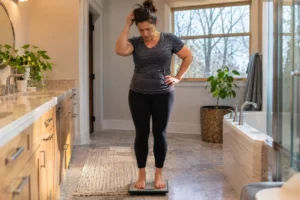
Can hypothyroidism cause weight gain? Yes, but usually less than people fear. The American Thyroid Association estimates that about 5 to 10 pounds can be put down to an underactive thyroid, depending on how severe it is, and most of that is retained salt and water rather than fat. Larger gains usually have other causes as well.
Quick answer: Hypothyroidism typically adds about 5 to 10 pounds, mostly fluid. Treatment brings weight back toward where it was before the thyroid slowed, but studies of levothyroxine show modest loss on average, and only about half of patients lose any. Once your levels are normal, weight loss works the same as for anyone else. Hypothyroidism can also raise LDL cholesterol and cause tiredness and feeling cold.
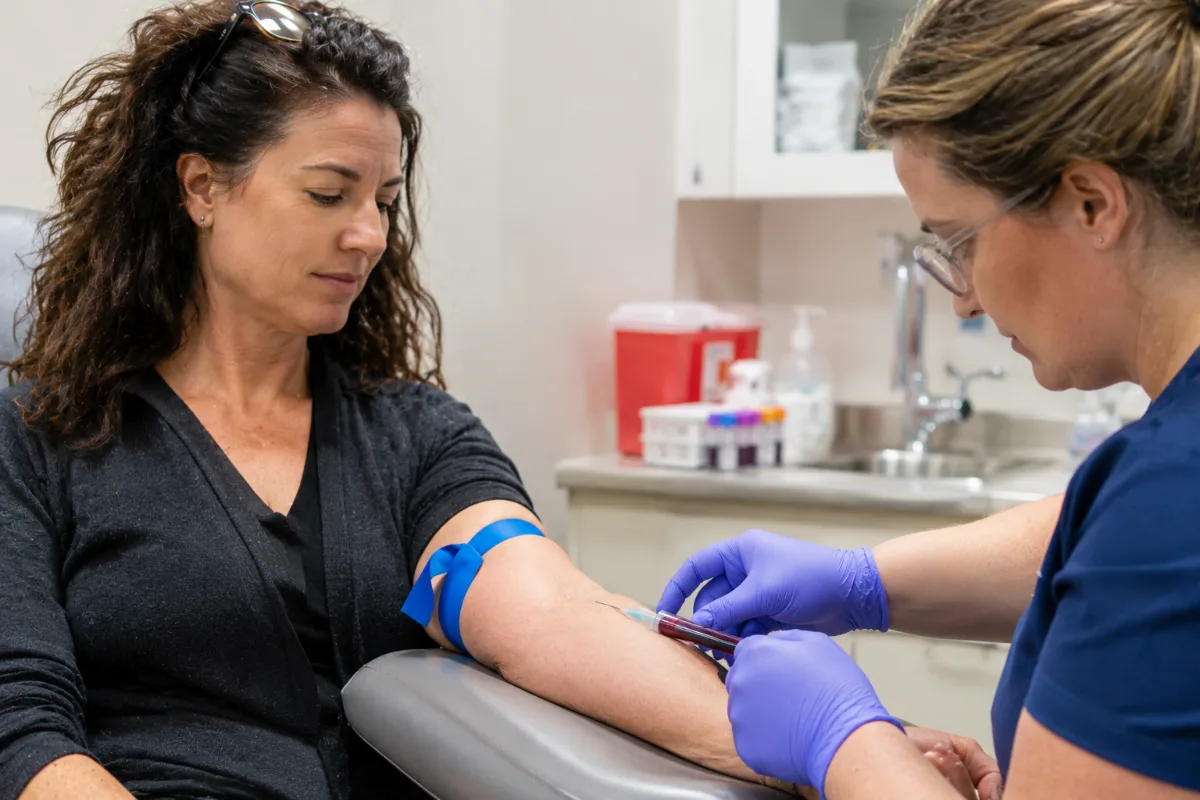
How much weight can hypothyroidism cause?
Less than the internet suggests. The American Thyroid Association (ATA) says “about 5-10 pounds of weight gain may be related to the thyroid,” with the amount depending on severity and the person. It adds that “most of the weight gained is actually due to retaining salt and water,” and that weight change in hypothyroidism is usually much less dramatic than in an overactive thyroid.
The mechanism is your basal metabolic rate, the energy your body burns at rest. Thyroid hormone sets that rate. When the thyroid slows, fewer calories are burned, and the body tends to hold on to fluid. A version of the ATA’s guidance published by the British Thyroid Foundation says massive weight gain is rarely linked to hypothyroidism, and that if weight gain is the only symptom, the thyroid is less likely to be the sole cause.
That last point deserves weight of its own. Someone who has gained 40 pounds over five years and feels otherwise fine probably has more than a thyroid problem going on, even if a test does come back low. The National Institute of Diabetes and Digestive and Kidney Diseases (NIDDK) makes the same point from the other side: fatigue and weight gain are common, and on their own they do not mean your thyroid is the problem.
Hypothyroidism is not rare, though. NIDDK says nearly 5 out of 100 Americans aged 12 and older have it, most cases are mild, and women are much more likely to develop it than men. Hashimoto’s disease, an autoimmune condition, is the most common cause.
| Weight from hypothyroidism | Weight from other causes | |
|---|---|---|
| Typical amount | About 5 to 10 pounds (ATA) | Any amount, often gradual over years |
| What it is | Mostly retained salt and water | Mostly body fat |
| Other clues | Feeling cold, tiredness, dry skin, constipation, forgetfulness | Often none, or signs of insulin resistance such as a larger waist |
| Blood tests | High TSH, low free T4 | Normal thyroid tests; glucose, A1c or lipids may be off |
| After thyroid treatment | Returns toward pre-illness weight, often modestly | Stays until diet, activity or other causes change |
Can you lose weight with hypothyroidism?
Yes. The ATA states that treating hypothyroidism “returns body weight to what it was before the hypothyroidism started,” and that once thyroid levels are normal, gaining and losing weight works the same as in people without thyroid disease. The catch is in how much weight actually came from the thyroid.
Real-world numbers are sobering. Boston University researchers S.Y. Lee, Lewis Braverman and Elizabeth Pearce reviewed records of patients newly diagnosed with primary hypothyroidism over eight years. In their 2013 report to the ATA’s annual meeting, about half (52 percent) lost weight in the 24 months after starting levothyroxine, with a mean loss of 8.4 pounds and a wide spread. Their conclusion was that treatment “is not associated with clinically significant weight loss in most people.”
The published version of that work, a study of 101 adults in Endocrine Practice described by HCPLive in 2014, looked at weight at the first visit where TSH had come back under 5 mIU/L, about five months in. Median TSH fell from 18.3 to 2.3. Median weight barely moved, by about 0.1 kg, and no demographic factor predicted who would lose.
Our honest read: fixing your thyroid fixes the thyroid’s share. It will not undo weight that came from other places, and for most people that is the bigger share.
There is one nagging finding. A 2018 meta-analysis by McAninch and colleagues, summarized by the ATA’s Clinical Thyroidology for the Public, reviewed 99 studies of people treated with levothyroxine. One of those studies found lower energy expenditure in treated patients than in healthy people. That is a single study, and it does not prove that treated patients burn fewer calories as a rule. It might explain why some patients with good lab results swear it is harder for them. We do not know yet.
How to lose weight with hypothyroidism
Start with the dose, then treat the rest like any other weight problem.
Get the level right first. The ATA’s hypothyroidism patient page says your blood is usually rechecked 6 to 8 weeks after starting or changing a thyroid hormone dose, and NIDDK says that once the dose works, testing usually moves to six months and then once a year. If you were diagnosed recently, give the medicine time before judging your weight. Cleveland Clinic notes that it usually takes a few weeks to notice symptoms improving.
Do not take extra thyroid hormone to lose weight. The ATA is blunt about this. Thyroid hormone has been used for weight loss in the past, extra hormone raises the risk of serious side effects, and “once the excess thyroid hormone is stopped, any weight loss is usually regained.” The British Thyroid Foundation’s version adds that it can cause loss of muscle protein.
Check what else is going on. Cleveland Clinic lists an underactive thyroid among the hormone conditions that can cause insulin resistance. If the scale will not move after your TSH is normal, fasting glucose, A1c and fasting insulin are worth a look. We cover that in our post on what causes insulin resistance.
Eat and move the way that works for everyone. A calorie deficit, enough protein and regular activity, including some strength work, are the same levers people without thyroid disease use. For food lists, iodine cautions and the soy question, see our guide on what to eat with hypothyroidism. We would not bother with any supplement sold as a “thyroid metabolism booster.” NIDDK warns that taking iodine supplements, or eating foods very high in iodine, can actually cause or worsen hypothyroidism, especially in people with Hashimoto’s.
Can hypothyroidism cause high cholesterol?
Yes, and it is one of the more useful reasons to test. NIDDK says hypothyroidism can contribute to high cholesterol and advises, “If you have high cholesterol, you should get tested for hypothyroidism.”
The clearest population data come from the Colorado Thyroid Disease Prevalence Study, published in the Archives of Internal Medicine in 2000. Researchers tested 25,862 people at a statewide health fair and found that “lipid levels increased in a graded fashion as thyroid function declined.” Even people with only a mildly raised TSH, between 5.1 and 10 mIU/L, had significantly higher total and LDL cholesterol than people with normal thyroid function. The same study found that 9.5 percent of participants had an elevated TSH.
Treatment helps, but may not finish the job. In the McAninch meta-analysis, the 23 studies that compared treated hypothyroid patients with people who had normal thyroid function found significantly higher LDL and total cholesterol in the treated group. Across studies without a comparison group, treated patients averaged an LDL of 138.2 mg/dL. The ATA summary concluded that levothyroxine alone “is not sufficient to normalize cholesterol levels” in many patients.
Practical takeaway: recheck your lipid panel once your thyroid levels are stable, rather than assuming treatment took care of it.
Does hypothyroidism make you tired?
Often, yes. Feeling tired is on every major symptom list, from the ATA to NIDDK, and Cleveland Clinic says hypothyroidism “can make you feel exhausted all the time.” When the body slows down, so do you.
Tiredness is a poor test on its own, though. In the Colorado study, symptoms were reported more often by people with low thyroid function, but each individual symptom was a weak predictor, and the likelihood of thyroid disease rose mainly as the number of symptoms went up. Fatigue plus feeling cold plus dry skin plus constipation is a stronger signal than fatigue alone.
If you are still exhausted after your TSH has been normal for a few months, the thyroid may not be the only factor. Iron, vitamin B12, vitamin D, sleep apnea, mood and blood sugar are all worth checking. It is reasonable to ask for a fuller look rather than being told your labs are fine.
Does hypothyroidism make you cold?
Yes. Thyroid hormone sets your resting metabolic rate, and much of the energy burned at rest leaves the body as heat. When thyroid levels fall, the furnace turns down. The ATA lists feeling cold first among its symptoms, and Cleveland Clinic describes it as an inability to tolerate cold temperatures.
People with an underactive thyroid often notice it in late fall, when everyone else is also reaching for a sweater and the difference is easy to miss. The tell is being cold when others in the room are comfortable, cold hands and feet that never seem to warm up, or needing more layers than you did a few winters ago. As Central Oregon heads into its long cold season, that is a fair reason to ask for a TSH test, especially alongside tiredness or slow weight gain.
Myth: Hypothyroidism explains large weight gains.
Fact: The ATA estimates about 5 to 10 pounds is thyroid-related, mostly salt and water. Massive weight gain is rarely due to hypothyroidism alone.
Myth: Starting levothyroxine will make the weight come off.
Fact: In a Boston University study, only about half of patients lost weight after starting treatment, and median weight barely changed by the time TSH normalized.
Myth: Taking more thyroid hormone is a safe way to lose weight.
Fact: The ATA warns that extra thyroid hormone raises the risk of serious side effects, and any weight lost is usually regained once it is stopped.
Frequently asked questions
How much weight can you gain from hypothyroidism?
The American Thyroid Association estimates about 5 to 10 pounds, depending on how severe the hypothyroidism is. Most of that weight is retained salt and water rather than fat. Large gains are rarely caused by an underactive thyroid alone, and if weight gain is your only symptom, the thyroid is less likely to be the whole explanation. Other causes, such as insulin resistance, are worth checking.
Will I lose weight once my thyroid is treated?
Possibly, but usually not much. The ATA says treatment returns weight to where it was before the hypothyroidism started. In a review by Lee, Braverman and Pearce, about half of patients lost weight in the two years after starting levothyroxine, with an average loss of 8.4 pounds. Weight gained for other reasons will not come off with thyroid treatment alone, so diet and activity still matter.
Why is it so hard to lose weight with hypothyroidism?
Sometimes the dose is not right yet, so it helps to wait until TSH is stable, which is usually checked 6 to 8 weeks after each change. Often, much of the weight was never thyroid-related. Insulin resistance, sleep and activity levels also play a part. One study in a 2018 review found lower energy expenditure in treated patients, but that finding has not been confirmed.
Can hypothyroidism raise LDL cholesterol?
Yes. In the Colorado study of 25,862 people, cholesterol rose step by step as thyroid function declined, and even mildly raised TSH was linked to higher total and LDL cholesterol. NIDDK advises anyone with high cholesterol to get tested for hypothyroidism. A 2018 meta-analysis found that LDL often stays higher than normal even on levothyroxine, so recheck lipids after treatment.
What thyroid tests should I ask for?
The standard starting tests are TSH, the pituitary hormone that tells the thyroid to work, and free T4, the form of thyroid hormone your body can use, according to the American Thyroid Association. Your clinician may add thyroid antibody tests to look for Hashimoto’s, the most common cause. Many clinicians also check a lipid panel, since hypothyroidism can raise cholesterol, and fasting glucose or A1c if weight is a concern.
If you are cold, tired and fighting a scale that will not budge, a thyroid workup is a sensible next step. At Proactive Choice, Dr. Drew Collins, ND, runs a full thyroid panel, including TSH, free T4, free T3 and thyroid antibodies, and reviews it alongside your nutrient levels and history. Learn more about hypothyroidism care in Bend, or book a free 15-minute call at +1 (858) 333-5196.
Sources
- American Thyroid Association. Thyroid and weight.
- American Thyroid Association. Hypothyroidism (underactive thyroid).
- British Thyroid Foundation. Thyroid and weight: the science (reproduced from the American Thyroid Association).
- National Institute of Diabetes and Digestive and Kidney Diseases. Hypothyroidism (underactive thyroid).
- American Thyroid Association. Does treatment of hypothyroidism lead to weight loss? (Lee SY, Braverman LE, Pearce EN, 83rd Annual Meeting, 2013).
- HCPLive. Can a thyroid hormone reverse weight gain from hypothyroidism? (summary of Lee SY, et al., Endocrine Practice, 2014).
- American Thyroid Association. Clinical Thyroidology for the Public, March 2019 (summary of McAninch EA, et al., Journal of Clinical Endocrinology and Metabolism, 2018).
- Canaris GJ, et al. The Colorado thyroid disease prevalence study. Archives of Internal Medicine, 2000.
- Cleveland Clinic. Hypothyroidism.
- Cleveland Clinic. Insulin resistance.
Medically reviewed content from Proactive Choice. This article is for education and is not a diagnosis. Talk with a licensed clinician about your own labs and treatment options.
Want to talk this through for your own health? Book a visit with Dr. Drew Collins, ND at 601 NW Harmon Blvd in Bend, or call (858) 333-5196.